I’ve been coaching for a while now, and there are lessons you learn every single day as a teacher and student in the world of fitness. In my opinion, you’re never too seasoned or knowledgeable to pick up a few tips from others; it’s how we grow.
If you don’t have much of the best gym equipment on hand or you just want to focus on bodyweight workouts for the new year, exercising without weights can still be seriously challenging. It helps you build functional strength as well as more robust joints, bones and muscles; such exercises also boost stamina and cardiovascular endurance, and even improve balance, core stability and coordination.
Phew — turns out you can build strength without lifting heavier weights. Here are three tips for how to smash your bodyweight workouts equipment-free from now on, according to a personal trainer.
Can you build strength without heavy weights?
If improving your maximal strength (read: hypertrophy vs strength training) is your goal, lifting heavy weights is the best way to do it. In this case, you’ll need to progressively increase the load you train with over time.
However, you can improve your functional fitness without weights. Bodyweight exercises are incredibly functional, allowing you to move in a "natural" way replicating many of the movements you do in daily life — squatting, pushing, pulling, jumping, or running, to name a few.
That means you’ll strengthen your body while also improving your ability to move day-to-day. Functional bodyweight movements may also improve mobility and flexibility, and I coach all my clients to be able to work efficiently with their body weight before adding load to compound exercises like squats or push-ups. Don't run before you can walk, as they say.
Think about some of the strongest, most mobile athletes around — gymnasts. They're elite at exercising with their body weight and have much relative strength, meaning they are strong compared to body size.
Other popular workout styles like calisthenics, CrossFit gymnastics and animal flow all fall under this category, too — bodyweight training. If you’ve ever completed the monster CrossFit Murph workout (a 1-mile run, 100 pull-ups, 200 push-ups and 300 air squats followed by another 1-mile run), you’ll already know you can fully torch your body and make strength gains without equipment.
Here’s how to make the most of it.
1. Time Under Tension (TUT)

The time under tension technique (TUT) focuses the tension on the target muscle groups using a full range of motion. Without weights, it helps work the muscles longer and harder by slowing down and controlling each phase of the movement.
There’s a four-digit tempo sequence used in weight training. For example, a push-up might be programmed at 4-1-4-1 — the client lowers into the push-up for 4 seconds, pauses for a second and then pushes upward for the count of 4. The higher the numbers, the greater the focus on TUT.
When you program bodyweight workouts, whether it’s upper, lower body, or an ab workout, slow your movements down while maintaining a full range of motion during each exercise. It’s also a great way to increase the mind-muscle connection, so consciously squeeze your muscles while you move.
2. Range of Motion (ROM)

ROM is a fancy way of referring to a body part’s ability to move efficiently around a joint or fixed point. Mobility exercises like hip rolls or shoulder swings improve ROM; the better it is, the less limitation you have during movement and the better your muscles may recruit. Your form may improve rapidly, too.
If you find your range of motion limited during workouts, regular mobility training can help: here are 3 mobility exercises I swear by to get you started. During the workouts themselves, work to a maximal range where you can without forcing your body into positions that will likely end up with injury.
For example, lower your chest to the ground during a push-up rather than halfway, then fully extend your arms when you push upward. Try lowering to (or below) parallel for squats, drive through your legs and fully extend your knees at the top.
Lunges should be completed with the back knee grazing the ground each rep, and so on. This goes back to time under tension, but also teaches your muscles to control movement, flexing and extending to their maximum ability.
In a gym setting, you might see weightlifters throwing weight just to hit the rep count, often leading to partial reps. Sure, they might hit their rep count, but they’re not recruiting the muscles properly; this could lead to injury. One study shows that subjects noticed better performance gains from strength training with full ROM versus short ROM.
3. Calisthenics, calisthenics, calisthenics
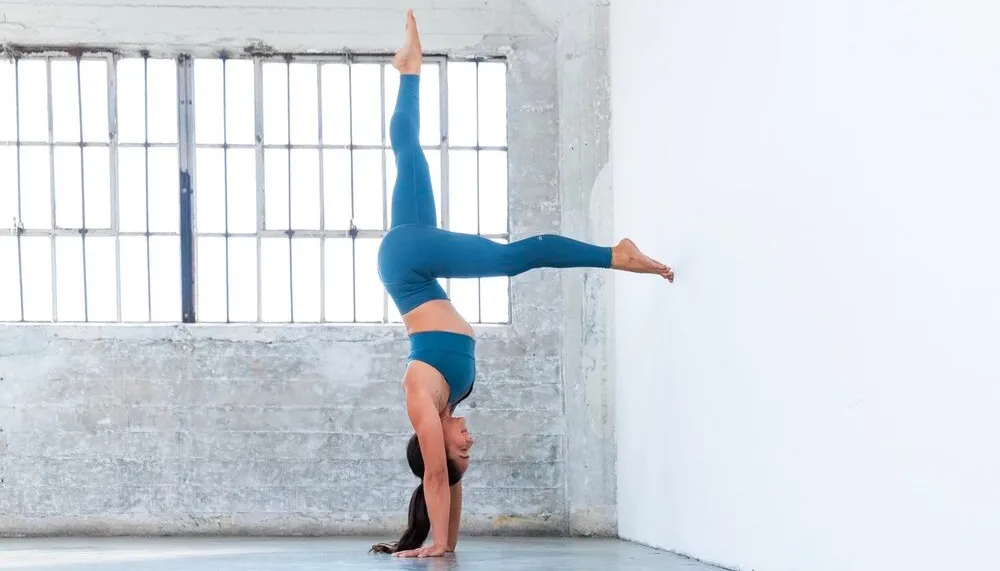
Who says body weight is boring? Certainly not me. I feel beasted after bodyweight workouts, sometimes more than if I used weights.
Calisthenics encompasses bodyweight training from gymnastics to the humble push-up. It’s been around for centuries and helps you learn to control your body weight in space while you move. L-sit holds, handstands, and plank variations all sit under the calisthenic umbrella, which means there are endless ways to challenge yourself without equipment or just using what's in your local park.
I recommend trying this 5-minute calisthenics workout for beginners and a calisthenics coach says these 12 moves build full-body functional strength and a stronger core. Even just incorporating more calisthenics into your existing routine could help improve other areas of your training, including strength training.
Bottom line
There’s no shortage of ways to get creative with your bodyweight routines. However, if you’re looking for other new and exciting ways to challenge yourself, check out more of my fitness tips below to help you achieve your goals.
More from Tom's Guide
- High reps vs heavy weights: which is better for building muscle?
- 3 tips for growing muscle using dumbbells
- 4 reasons you're not building muscle in the gym
- 3 things I wish I had known about stretching and mobility