




The mid-range phone market has really heated up in recent years. From Apple reintroducing the iPhone SE series in 2020 (with an update in 2022) to Google hitting its stride with the Pixel A series, budget-conscious buyers have a lot to choose from in the sub-$500 best cheap phone market.
This summer, we saw a new player enter the ring: Nothing. Started by Carl Pei, who originally co-founded OnePlus, the ridiculously-named company wanted to make a splash with products that made tech "exciting" again. And admittedly, Nothing's first product, the Ear (1) true wireless earbuds, turned some heads. With good sound and a very appealing aesthetic, Nothing started small with the Ear (1) and it seems to have worked out well.
But a Nothing phone was inevitable, knowing Pei. Sure enough, rumors started swirling earlier this year and then the phone launched in July. The Phone (1) clocks in as a firmly mid-range device with a great price of £399, going head-to-head with the likes of the iPhone SE (2022) and Samsung Galaxy A53 (also £399). In fact, I quite liked the Phone (1) other than its cameras, which proved disappointing in most respects.
Then the Google Pixel 6a came out and suddenly the mid-range market became a lot more interesting. This little phone packs in Google's Tensor system-on-chip, the same one that powers the Pixel 6 and Pixel 6 Pro. So the 6a has flagship-class power for just $449/£399, plus incredible cameras to boot.
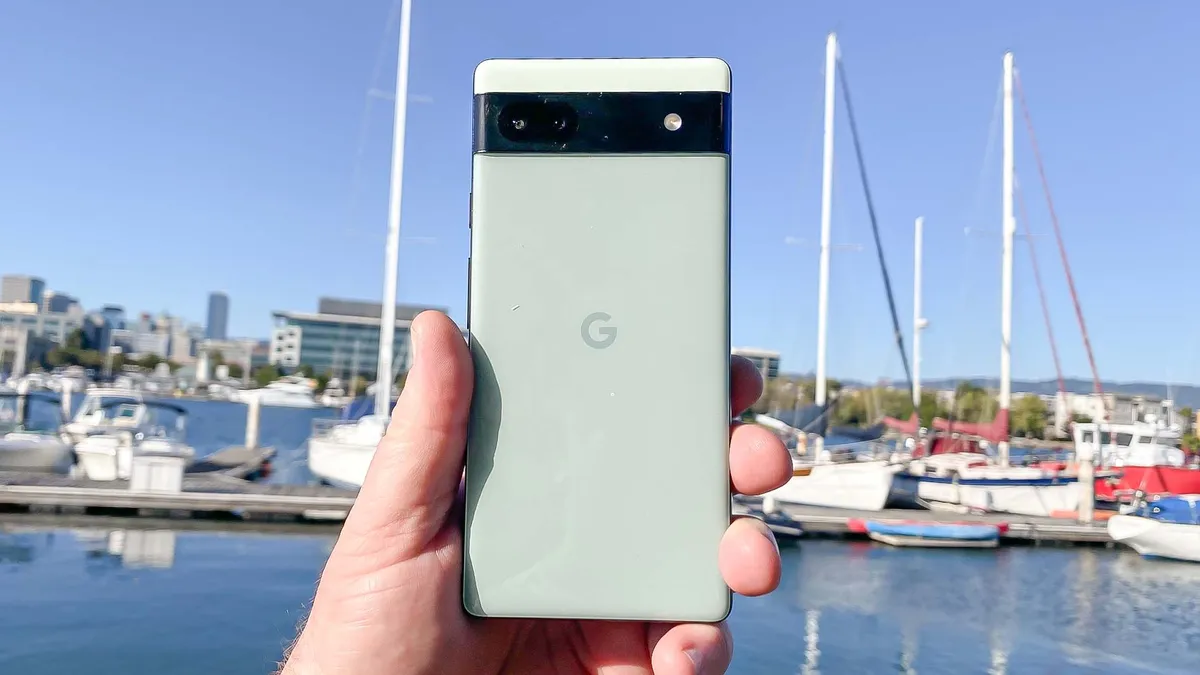
Your £399 suddenly could buy you a lot of phone. If you like Samsung, you could go for the Galaxy A53, which I liked a lot in my review. You could vote for the underdog and grab the Phone (1) — and get the cool transparent back and Glyph interface. Or you could pick the Pixel 6a, which would offer you the best cameras and Android phone performance at this price point. For £20 more, you could nab an iPhone SE (2022) at £419.
Of those four, my eye goes to the Pixel 6a and the Phone (1). The latter left an impression with more than just its pretty and flashy looks. The Snapdragon 778G+ chipset, while not a gaming monster, performed daily tasks very well. Though the device looked eerily like an iPhone 12, I liked how it felt to use the Phone (1). For a first-generation product, I think the Phone (1) is pretty good.
But the Pixel 6a is just better and, if you ask me, a wiser use of your money. It runs laps around the Phone (1) in terms of performance and cameras. In fact, I'll be pitting them both against each other soon. But the Pixel has far more AI smarts than the Phone (1), allowing it to do incredible things like Magic Eraser and all of the calling features.

However, the Phone (1) does have a single leg to stand on: battery life. When we test a smartphone's battery life, we have the handset endlessly reload web pages over a cellular connection until it dies. The Pixel 6a turned in an incredibly poor result of 6 hours, 29 minutes. The Phone (1) went considerably longer at 10 hours, 50 minutes — nearly four and a half hours longer than the Pixel.
Battery life plays a major role in whether I recommend a smartphone or not. Luckily for the Pixel 6a, it gets just about everything else right such that the wins outweigh the bad battery life. My colleague Philip Michaels agreed with that sentiment in his Pixel 6a review.
In this day and age, £399 means a lot to a lot of people, so making sure you get the best bang for your buck is important. The Pixel 6a wins my recommendation for that price, despite the fact that I also like the Phone (1). Even though the battery life is not good, the Pixel, with its cameras and Tensor, simply makes the Phone (1) look like a chump.
I applaud Nothing's first effort, but Google has the advantage with an in-house SoC and years of computational photography experience. Believe me, I want to see Nothing succeed, but when money means more now than ever, the Pixel 6a is the better bet.

