




There are two ways to get the cheapest phone. The first is to choose something that's cheap from the moment you buy it from the shop. The second is to get a slightly older, but still good phone that's shaved a few dollars off its waist line since its release.
To help you find the best cheap phone for you, be that a brand new model or one that features yesterday's top-shelf specs, we've made this list. The best cheap phone at the moment is the Google Pixel 10a, bringing key upgrades to the Pixel line for a still-good price. Or, you could opt for the similarly excellent but slightly older Google Pixel 9 Pro refurbished. You get extra, flagship-quality features for a similar price.
There are loads more options, of course — here are our picks for the best cheap phones you can buy today.
The best cheap phones you can buy today
Why you can trust Tom's Guide Our writers and editors spend hours analyzing and reviewing products, services, and apps to help find what's best for you. Find out more about how we test, analyze, and rate.
Best cheap phone overall


Google's done a lot of things right with its past A-series Pixels, but the Pixel 10a is a strange one. That's because it doesn't get as many hardware upgrades over the Pixel 9a, but it's added more to the software while keeping the price firmly at $500.
Despite the lack of newer hardware, the Pixel 10a is still easily the most well-rounded phone you can buy for that price right now. Most notable is AI, and Google has added the some features you'd find on the rest of the Pixel 10 series. A couple of features are missing, like Pixel Screenshots and PixelSnap, but the really important stuff is still here.
You still have access to Gemini Live, Circle to Search, and all the generative AI tools within Google Photos like Ask Photos. Plus, you still get all the features I've seen on older models, like Magic Editor and Magic Eraser. New AI tools included in the mix are Auto Best Take and Camera Coach. All thanks to the Tensor G4 chipset which, while not a performance powerhouse, makes up for it in AI prowess.
While the design is simple, it's incredible to see that Google has reduced the camera bump by even more to be practically flush against the rest of the phone. Considering how large some phone cameras are, that's an incredible achievement. In typical Google style those dual cameras offer better quality than their specs let on.
The display is also notable, as the 6.3-inch panel is still plenty bright despite being slightly dimmer than the Pixel 9a. Then there's also the adaptive refresh rate, which switches between 60 and 120Hz depending on what's on screen — just like Pixel 10.
- Read our full Google Pixel 10a review
The refurbished alternative

More on the Pixel 10a
- Google Pixel 10a vs Pixel 9a: What's the difference?
- The Google Pixel 10a is here with a new look and features — here’s what you need to know
- Google Pixel 10a preorders are live, but I wouldn't pay full price! Here's how to get yours for free
Best features on a cheap phone

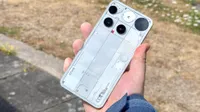
The Nothing Phone 4a Pro is arguably a little boring compared to the company's previous devices. But it's still a capable phone that offers some excellent specs for its price.
Nothing's new budget phone stands out with its expansive 6.83-inch display and class-leading brightness of up to 5,000 nits, catering to users who appreciate a large and bright screen. And let's face it, that's basically everyone.
Battery life is another highlight. In our testing, the Phone 4a Pro pushed past the 18-hour mark on a single charge. During a full day of demanding use, we wrapped up seven hours of screen time with the battery still just above 50%, so power anxiety is never really an issue here.
The camera setup includes an 8MP telephoto lens with 3.5x optical zoom, a feature we found valuable for capturing distant details. We like the the overall camera performance for this price too, with the Phone 4a Pro capturing vibrant, balanced shots in most conditions.
There is a trade-off, though. The Nothing Phone 4a Pro can't quite match the Pixel 10a or other rivals on raw performance, particularly if you’re chasing the fastest chip. For anyone prioritizing a big, bright display and reliable battery life, the 4a Pro offers compelling features in its class.
- Read our full Nothing Phone 4a Pro review
The refurbished alternative
Best cheap phone under $300

Price change
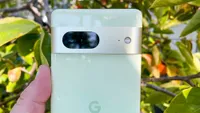
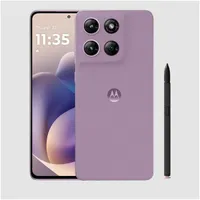
On launch, the Moto G (2026) cost $199, but then rose in price by $100 a few months later. We're going to leave it here because you can often find it for that price, but this is now a more expensive phone that is not worth its new higher price.
After the price rise, we've had to rethink how we tested the Moto G (2026). While it was a decent handset for the $199 it cost at launch, it is now a slightly trickier phone to recommend for its raised price. For $299, we'd prefer if there was a more powerful chip inside, and that the display were brighter.
There are still some features that we really like here. The battery life is excellent, amongst the very best around. It's even more than Samsung's range-topping phones, and more than Apple's mid-range handsets that come at a hefty price premium. We're also pretty impressed with the performance of the cameras on board, with some great shots taken with a phone that costs a decently low price. It also looks pretty good, although it does feel plasticky in hand.
Our recommendation, after the price hike, now needs some caveats. If you can find it for its old price, its well worth picking up. But if you're going to spend the $300, you should find an older device higher up the phone food chain that's been refurbished — that'll give you more performance and a nicer device in hand.
- Read our full Moto G 2026 review
The refurbished alternative
Best cheap foldable phone

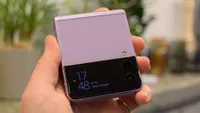
Sure, it's been replaced by a newer model, but the Motorola Razr 2024 earns its place because it's one of the only foldable phones you can buy without spending a fortune. While the newer Razr 2025 fetches $699, the Razr 2024 costs less at $599.
I know very well how expensive foldable phones can get, but the Razr 2024 still has a lot of utility as a flip-style foldable phone. For example, I still love how it features a dual-camera setup that consists of a 50MP main and 13MP ultrawide, which pairs well with its larger 3.6-inch outer screen.
I've explained in my review how this setup is suitable for creators, such as vlogging and self-recordings, mainly because you can see yourself on the outer screen to see what the framing's like. If that's not enough, the Motorola Razr 2024 manages to squeeze in a 4,200 mAh battery, which results in a time of 14 hours and 37 minutes in my battery drain test.
Lastly, flip-style phones like the Razr 2024 have extra utility I don't get in typical slate phones. The best example of this is being able to watch videos hands-free by folding it halfway and placing it on a surface. Another is being able to run full apps more comfortably with one hand with its outer screen.
- Read our full Motorola Razr 2024 review
The refurbished alternative
Best Cheap iPhone

iOS 27 is here — but the 17e doesn't get all the features
The latest version of Apple's phone operating system and there are loads of new features on board. While the 17e gets many of them, you're going to need to stump up the cash for a more expensive device if you want to have more expressive voices for Siri and the advanced dictation options.
The iPhone 17e is the refined version of the iPhone 16e that Apple should have given us from the beginning. While sticking at the rather high $599 price point, the 17e distinguishes itself from its predecessor by finally integrating MagSafe connectivity, doubling the starting storage to 256GB, and adopting a more powerful A19 chip.
While it retains the same overall design as the 16e, the inclusion of MagSafe magnets for accessories and wireless charging makes the 17e a more complete "budget" option than last year's somewhat compromised model.
The iPhone 17e sticks with Apple's traditional display notch and a 60Hz refresh rate, making for a less-than-favorable comparison with the other phones on this list. Fortunately, the iPhone 17e has gained Ceramic Shield 2, a material shared with the more expensive iPhone 17 that promises significantly better scratch resistance than older models.
The 17e remains limited to a single rear camera lens—though it does leverage software for "optical-quality" 2x crops and improved portrait effects. Other phones on this list offer at least an ultrawide camera on their backs, which gives extra versatility even if their image processing isn't on par with Apple's.
The iPhone 17e is the strongest value play for anyone currently using an iPhone 14, or an older SE model. By bridging the gap between the budget and flagship tiers, it is a compelling option for those who want the reliability and performance of the latest iOS ecosystem without the extra cost of a secondary camera lens or the high-refresh-rate display of the flagship iPhone 17.
- Read our full iPhone 17e review
The refurbished alternative

More on the iPhone 17e
- I just reviewed the iPhone 17e — ask me anything and I’ll answer your questions LIVE
- Your iPhone 17e needs a case — I've picked 12 great budget-friendly options from less than $10
- This is my favorite MagSafe accessory — and it's perfect for iPhone 17e
Best cheap Samsung Galaxy phone


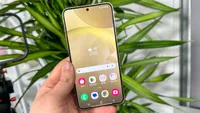
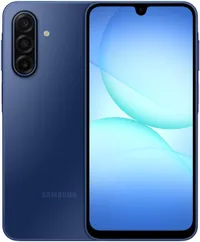
The Samsung Galaxy A57 stands out for its expansive 6.7-inch AMOLED display, flagship-grade materials and impressive battery endurance, despite being a budget phone. This combination makes it appealing for anyone who prioritizes reliability over outright performance.
On the camera front, the A57 features a triple-lens setup: a 50MP main sensor, a 12MP ultrawide, and a 5MP macro lens. Setting the disappointing macro aside, the A57's cameras deliver versatility for everyday shooting, keeping pace with what most buyers expect in the midrange Samsung lineup.
One area where the A57 shows its budget roots is charging speed. In daily use, it takes noticeably longer to top up compared to the fastest-charging rivals, which can be a minor frustration for heavy users or anyone rushing out the door.
The Galaxy A57 is best suited for Samsung loyalists and value-seekers who care most about display size, reliable battery life, and a familiar camera experience. If you want a taste of flagship software and don’t mind the trade-offs in charging and performance, it deserves a close look.
- Read our full Samsung Galaxy A57 review
The refurbished alternative
More on the Galaxy A57
Cheap phone camera comparison
Something you might want to consider when buying a new phone is how good the cameras are — we've put some samples below so you can judge for yourself.
Main camera comparison


Selfie comparison


Why should I get a refurbished phone instead of a new one?

Cheap phones are good, but they often don't have great specs — especially when you compare them to yesterday's flagships. Flagships often have lower prices when you compare them to their newer, cheaper counterparts. I find that one of the best ways to get a good price on a phone is to go for something a bit older that's been refurbished.
You'll often find that cameras are more impressive, screens better and even processors more powerful. The only place that I've seen downsides is in the battery life, as lower-power phones don't use as much juice as more powerful phones of yesteryear do.
So why not buy used? A used phone might not work all that well, and there's no guarantee that it's been looked after. A refurbished phone (if you buy it from the right place) will have been thoroughly checked over and renewed to make sure its good as new.
Just a couple of things to watch out for when shopping refurbished:
- Make sure that you're buying from a reputable source — Apple Refurbished, Amazon Renewed, and Backmarket are solid options.
- Ensure there's a money-back guarantee if you're shopping elsewhere. That way, if anything goes wrong or you're not happy, you can return your device.
- Avoid the lower quality levels. Most refurbished sites offer different levels to indicate the state of the device, like mint or used. I'd stick with the higher tiers here, lest you end up with a phone that's smothered with scratches.
- Don't expect an as-new device. While refurbishers try to make sure that the devices they sell look good, they're still phones that have been used. Expect light surface marks and other usage indicators on even the best refurbished devices.
How we test the best cheap phones
We evaluate budget-priced phones the same way we do flagships. We perform real-world testing and synthetic benchmarks over several days to evaluate it's performance and value. This includes our own battery test, which involves continuous web surfing over cellular at 150 nits of screen brightness. The devices that make our best phone battery life list tend to last over 11 hours.
| Row 0 - Cell 0 | Battery Life (hours:minutes) |
Recharge level at 15 minutes (%) |
Recharge level at 30 minutes (%) |
Google Pixel 10a |
15:16 |
41 |
64 |
Nothing Phone 4a |
N/a |
24 |
52 |
Moto G (2026) |
19:10 |
13 |
27 |
Motorola Razr (2024) |
14:37 |
33 |
58 |
iPhone 17e |
12:35 |
32 |
59 |
Samsung Galaxy A57 |
N/A |
N/A |
N/A |
In terms of performance, we use Geekbench to measure overall speed and compare versus phones in the same price range. And the same thing goes for 3DMark's Wild Life Unlimited for graphics testing. We also perform our own video editing/transcoding testing using the Adobe Premiere Rush app to gauge real-world speed.
| Row 0 - Cell 0 | Geekbench (single-core / multicore) |
3DMark Wild Life Unlimited (FPS) |
Google Pixel 10a |
1,694 / 4,501 |
58.49 |
Nothing Phone 4a |
1,315 / 4,160 |
46.48 |
Moto G (2026) |
804 / 2,124 |
8.2 |
Motorola Razr (2024) |
1,055 / 2,999 |
18.97 |
iPhone 17e |
3,606 / 9,229 |
110.9 |
Samsung Galaxy A57 |
1,375 / 4,417 |
37.5 |
For evaluating cameras on cheap phones, we will take multiple photos in different conditions and will use other affordably priced phones in the same scenarios in order to make side-by-side comparisons.
For more information, check out our how we test page for Tom's Guide.
Also tested
What to look for in the best cheap phones
After you've found a cheap phone at the exact right price for your budget, there are a few other things to consider. For phones to qualify here, they have to be $600 or lower because that seems to be threshold from my colleagues and I consider affordable or budget — whereas flagship models can easily exceed $1,200.
Think about the features that this device has to offer and which ones you're sacrificing for that specific price tag. Battery life, the number and types of cameras, display refresh rate and the type of chipset powering the phone are all ways that cheap phones can distinguish themselves.
One other area to consider is software updates and support. I'veseen cheaper Android phones either ship with older versions of Android or promise very few upgrades to future versions. Samsung and Google tend to have some of the better upgrade policies with its Galaxy A lineup with up to seven years of updates, and the iPhone remains a standout for usually supporting five years of iOS updates.

