






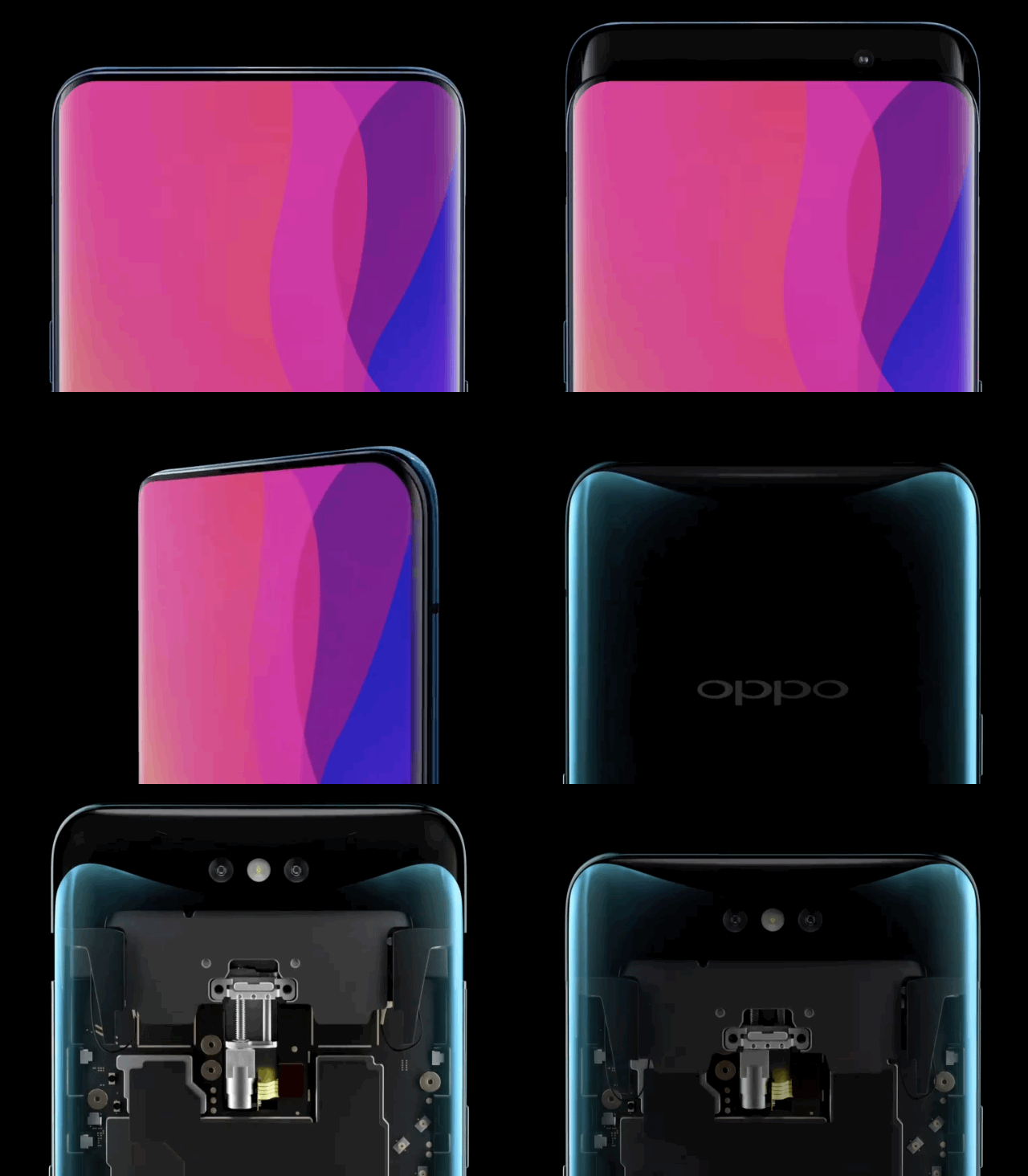
2019 seems like a decade ago, but if you were paying attention to smartphones that year, then you might remember one of the features every Android seemed to be using - pop-up selfie cameras. They all disappeared come 2020, but now they may be coming back.
Two recently found patents, one from Oppo and the other from Samsung, show how pop-up cameras could prove their worth against the dominant punch-hole cameras. The answer is simple enough - offer more than the competition.
- Samsung Galaxy S21 review
- These are the best Android phones that we've tested
- Just in: iPhone 13 will fix the worst thing about the iPhone 12 — here’s how
The history of pop-up smartphone cameras
Back in 2019, the pop-up camera seemed quite popular with Chinese smartphone makers. Companies such as Oppo, OnePlus and Xiaomi included them in that year's flagship phones. An unusual answer to a common question — how do you fit selfie cameras onto a phone without increasing the bezel or shrinking the screen? — these mechanisms were as helpful as they were surprising.
Other phones went for a notched design, most famously all flagship iPhones from the iPhone X to the latest iPhone 12, but that eats a big chunk of the display's top edge. There was also the waterdrop notch, which gave some space back but didn't leave any room for facial recognition tech. The current trend is the punch-hole notch, which is smaller than the previous solutions, but still blocks up a small portion of the screen.
Pop-up cameras are a great solution for this, since it means the display can be left unhindered. They don't have to carry just cameras either. For example, Xiaomi added an LED to its Mi 9T Pro's camera so you could see when it was in use during video calls. Meanwhile the Oppo Reno built the flash module onto the Reno's shark fin, so the back could have a cleaner design overall.
The problem with pop-up smartphone cameras
They do add some inconvenience though. First off, the mechanisms add some extra weight. For example, compare the OnePlus 7 Pro’s weight (7.26 ounces) to the OnePlus 8 Pro (7.02 ounces). The 8 is lighter despite it being 0.1 inches larger, and armed with a 5G modem. These mechanisms also add a little extra thickness, again comparing the OnePlus 8 Pro (8.5mm thick) to the OnePlus 7 Pro (8.8mm).
These are only small differences, but they can make a huge impact on how comfortable a phone is to use. And while the pop-up mechanism and motor are no doubt very reliable, they add another point of failure within the phone that’s difficult to repair.
More importantly, we are on the cusp of under-display cameras becoming a mainstream feature. The first phone to use this, the ZTE Axon 20 5G, had some flaws, but in a year or two we can expect most prominent Android phones to use under-display cameras. This would likely solve the notch problem for good and make other solutions, including pop-up cameras, redundant.

Oppo and Samsung could make pop-up cameras work
However these new patents show how pop-up cameras might still have some use.
Oppo's new concept uses two prisms to let a single internal camera array capture images from both the front and back of the phone; either separately or simultaneously. Meanwhile Samsung's shows a rear camera module that can rise up and rotate 180 degrees for use as a big selfie camera array, similar to the flipping camera on the Asus ZenFone 7.

The innovation seen here from the Samsung and Oppo patents shows that now is not the right time to write pop-up smartphone cameras off entirely. I just don't think we need a full-scale comeback for the pop-up camera, either.
Pop-up cameras could have a future on enthusiast photography phones, while most stick to making their front cameras as unobtrusive as possible. Just like flip phones were dead before the Samsung Galaxy Z Flip gave that design a new lease on life, the injection of new tech might bring pop-up cameras back.

