With darker winter days, bringing light into our homes seems ever more important. And although nothing beats the mood-enhancing sun, and the benefits of Vitamin D, having a light-filled home can help improve your mood.
However, while paint, fabrics and furnishings are at the forefront of our minds when decorating our interiors, the benefits of effective lighting often get forgotten.
To help us achieve the balance, Ally Dowsying, founder and lighting expert at Dowsing & Reynolds, shares her 5 top tips on how to brighten any room in your home.
Apart from looking at lighting, adding greenery to your home in the darker months can add vibrancy to your interior and brighten up your space.
1. Work with natural light
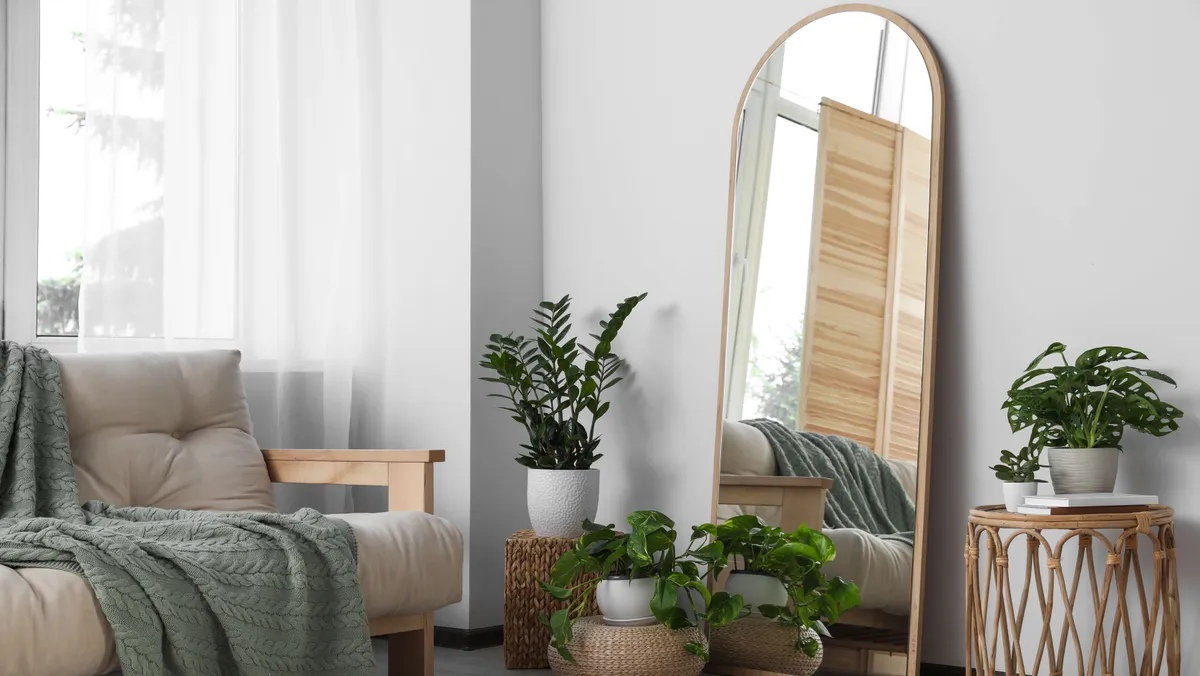
When planning your lighting, it’s best to work with what you already have, and that’s natural light. Dowsying suggests, “When it comes to selecting the number and strength of artificial light sources in your space, considering how much natural light the space gets is key — especially if you’re designing an outdoor living space such as a garden room.”
She recommends monitoring the space to assess whether your room is north, south, west, or east facing, as knowing this will help to highlight how much artificial light is needed for the room. For instance, a south-facing room will gain more natural light than a north-facing one, which may require more artificial light.
On a similar note, she also advises, “Take note of the size of windows or skylights you have, as if you have a light and airy space, you might find you don’t need your lighting scheme to be as bright.”
Here again, the level of natural light will help you focus on the best way to add artificial light to the space. “If you find your kitchen or garden room has lots of bright light, use task lighting such as pendant lights to illuminate the space for activities such as reading or cooking,” she says.
2. Choose the most appropriate lighting for the space

It can be a mistake to think that every room should be lit the same way, as different rooms in your home have different purposes. While some are functional, like kitchens, and require bright tasking lighting, bedrooms require softer lighting to relax.
“Often in our home design, we tend to choose lighting without thinking about what’s needed or what will be most functional, “ says Dowysing. “Therefore making sure to choose the most appropriate lighting for each room is key.”
Dowsying suggests that warm light is appropriate in a bedroom to create a soothing atmosphere, while spotlights are ideal in a kitchen.
The same approach applies to how you tackle outdoor lighting. “Make sure there are convenient path lights and porch lights between your home and garden room to help you in and out safely in the evening.”
You might also want to consider the best solar lights for outdoors, with spotlights that can highlight a flower bed, or a trail of lantern lights to line a pathway.
3. Plan your lighting before you decorate

It can be easy to get caught up with the excitement of choosing a new curtain fabric or paint color when decorating a room, while forgetting about how light can impact an interior scheme.
However, Dowsying suggests planning ahead, “Think about how you want to use the space, mapping out where key pieces of furniture will be placed, such as side tables and coffee tables. While this does require extra time and planning, this will help to ensure you have the right switches, wiring, and light fixtures in the right places.”
It will save you the headache of underdoing your hard work if you need to wire in an extra socket or light feature to achieve the level of light you desire once you've finished decorating.

4. Think in multiples

Rather than planning purely overhead lighting, think in layers to create a range of lighting effects. Dowysing says, “Ensuring you have a mix of lighting in a room is key, as this will help to bring the room to life,” and she suggests, “Include a range of task lighting, accent and overhead lights to help the room work for different purposes — from reading, cooking to even napping.”
Adding multiple lights also gives your room added flexibility in creating different moods and ambiance, providing bright light, spotlighting, and ambient light.
But how far do you go? Dowsying suggests, “When it comes to how many light sources to include in your space, it does depend on the size of your room. On average, we recommend a living room to have two to three lamps scattered around the room, but no more than four.”
Within a typical room, she recommends a lighting scheme that includes a ceiling light, wall lights, and a floor light, adding, “It’s a great formula for a well-lit room that can be easily transitioned down for the evening.”
5. Consider color temperature

The color temperature of a bulb will play a big part in the look and feel of a room. It also helps to know that light is measured in degrees of Kelvin (K), which ranges from 1,000 to 10,000.
If you are after bright task lighting to use in a garage or basement, you need to consider lighting at 5,000 Kelvins, which mimics daylight, whereas in the home, you’ll be looking for warmer light, between 2,700 and 3,000 Kelvins.
Whatever you do, Ally says it’s important to make sure the light bulbs you choose for your home have a similar color temperature to avoid clashing.
Opting for smart lights will give you greater flexibility when controlling the color temperature, as you can select between warm and cool light using an app or home assistants, such as Google Home and Alexa.
More from Tom's Guide