




Google Assistant is already pretty clever, but it's getting a bunch of updates to make it even smarter — including one that will teach it to stop mispronouncing names.
The updates are detailed on Google's official blog post and mainly concern how Assistant handles context and natural speech. Chief among them are new skills to help it properly pronounce and recognize the names of your contacts, and to remember past conversations when completing a task.
- How to use Google Assistant: Tips and tricks to try now
- Here are the best Google Home smart speakers
- Plus: How to change the Google background image
Google Assistant update: Recognizing unique names

Google Assistant can get it wrong when enunciating uncommon or tricky names, but the update will let you teach it to how to pronounce them the way you do.
And it looks simple to use: as the video below demonstrates, you'll be able to select the option to "record your own" pronunciation of a name, with Assistant then using your voice to learn how to say it in future.
Importantly, Google adds it will not keep a “recording of your voice,” after listening to you articulate a person’s name. The feature will roll out in the next few days and though initially only available in English, Google says it also plans to add the functionality to other languages.
Google Assistant update: Better timers
Google also says it has rebuilt Assistant’s Natural Language Understanding (NLU) to cope with the elasticity of day-to-day conversation and more accurately understand what you're asking it.
One of the key benefits to this improvement is that Assistant will now respond "100 percent more accurately" to timer tasks and alarms you've set.
For instance, if you have more than one timer going at the same time, it will do a better job of understanding which one you want to cancel, or when you want to change the length that one runs for. It will also realise that you might not use the exact same phrase to cancel it as you did to create it.
These new context-aware abilities were made possible by upgrades to Google's cutting-edge BERT technology, which was invented by the firm in 2018 and which processes words in relation to all the other words in a sentence, rather than one-by-one in order.
This update is available now for alarms and timers on Google smart speakers in English in the U.S., and will be coming to phones and smart displays soon.
Google Assistant update: More natural conversations
What's more, Google Assistant will also be much better at using previous questions to inform your follow-ups, making for a much more natural conversation.
In the example it gives below, an initial question about the weather in Miami is followed up with a question about beaches and then another about buildings.
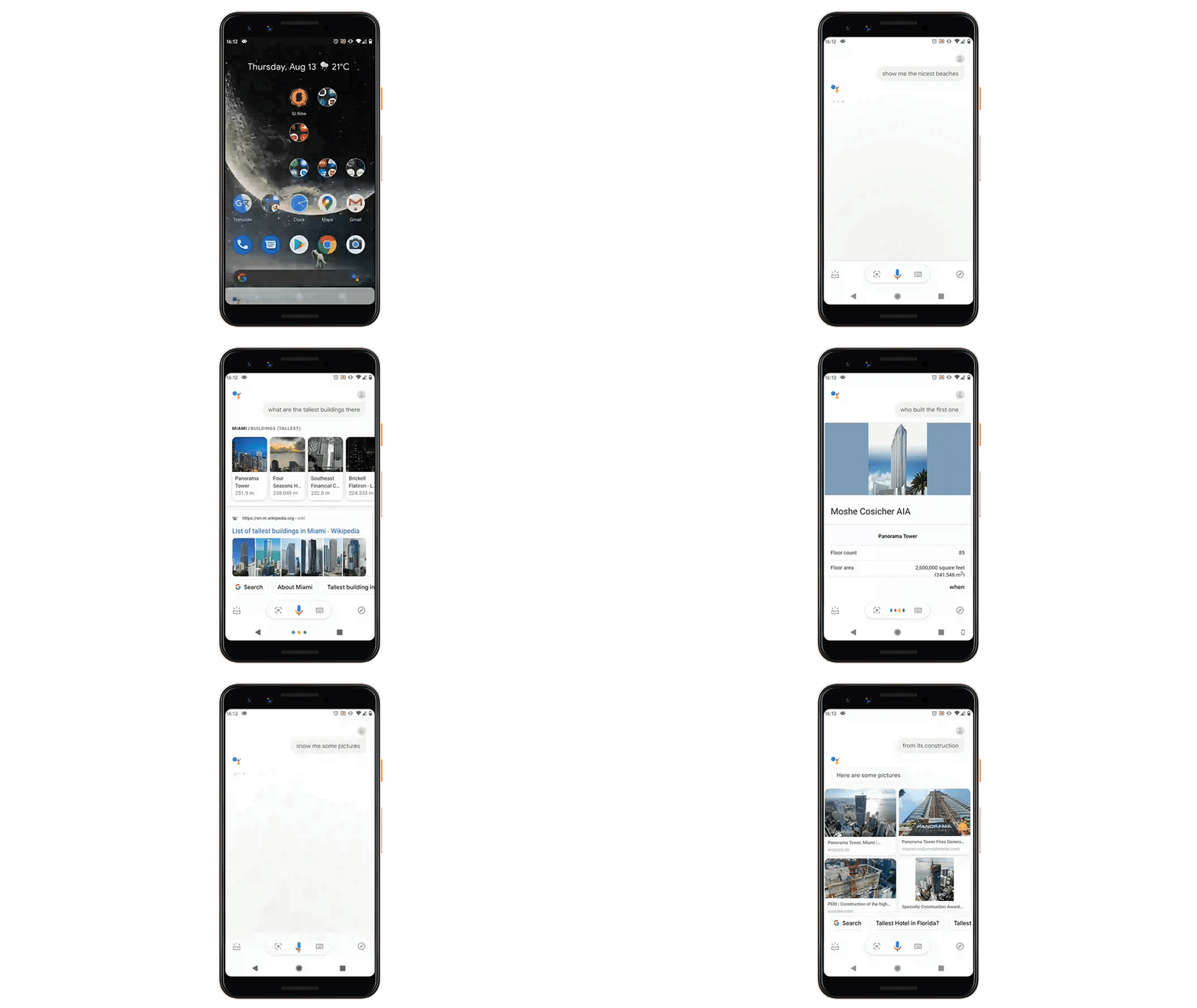
Each time, Google Assistant understands that the follow-ups come in the context of the first, and responds accordingly. Google also explains that it will take into account what you're looking at on your phone or tablet's screen when you ask the question.
Other recent Google Assistant updates include the ability to perform tasks without a wake phrase and to help locate your phone; we've rounded up all of favorite Assistant skills in this list of the best Google Assistant commands.
More: The best Google Assistant commands in 2021

