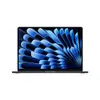
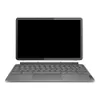
Asus just dropped a new line of ProArt laptops at Computex 2024 — armed to the teeth with the latest AMD Ryzen AI 300 and Snapdragon X Elite chipsets to become full blown Copilot+ PCs. The AI computing era has truly started here at Computex 2024, and the P16, PX13 and PZ13 are leading the creativity charge.
Why do I say that? Well beyond the key AI horsepower mentioned above, it comes down to three key things: OLED, a ton of I/O and the software to help guide your imagination. Let’s get into them.
Specs
| Spec | Asus ProArt PZ13 | Asus ProArt PX13 | Asus ProArt P16 |
|---|---|---|---|
| Display | 13.3-inch 3K OLED, 16:10 aspect ratio | 13.3-inch 3K OLED, 16:10 aspect ratio | 16-inch 4K OLED, 16:10 aspect ratio |
| CPU | Qualcomm Snapdragon X Elite | AMD Ryzen AI 300 series | AMD Ryzen AI 300 Series |
| GPU | Integrated graphics | Integrated graphics | Up to RTX 4070 |
| RAM | Up to 16GB LPDDR5X | Up to 32GB LPDDR5X | Up to 64GB LPDDR5X |
| SSD | Up to 1TB PCIe 4.0 SSD | Up to 2TB PCIe 3.0 SSD | Up to 4TB PCIe 4.0 SSD |
| Ports | 2x USB 4.0 Type-C, 1x SD card reader | 1x USB 3.2 Type-A, 2x USB 4.0 Type-C, 1x Audio Jack, 1x MicroSD, 1x HDMI 2.1 | 1x USB 4 Type-C, 1x USB 3.2 Type-C, 2x USB 3.2 Type-A, 1x Audio Jack, 1x SD card slot, 1x HDMI 2.1 |
| Battery | 70Wh | 73Wh | 90Wh |
Creative on-the-go


Let’s start with the similarities across all of these new ProArt systems. First, they’re all military-grade tested for durability. Second, they all come with over 40 TOPS of NPU performance for turboboosting that AI performance. And third, they come with a ton of free software to get creating — including a 6-month free subscription to CapCut and three months of Adobe Creative Suite.
I’ll leave the PZ13 for later on, but the PX13 and P16 are more similar in nature — both packing gorgeous Lumina OLED displays with 100% DCI-P3 color gamut, the latest AMD Strix Point CPUs for 50 TOPS performance, and the helpful DialPad built into the touchpad. The 16-inch comes with the extra boost of dedicated graphics with up to a GeForce RTX 4070 GPU, and let’s not forget the beefy 90Wh battery that should keep it going for a good few hours.
Oh, and did I mention all of these come armed with WiFi 7 for super fast network speeds? That future-proofs it for all the new routers we’re starting to see at Computex.
Watch out, Microsoft!
Out of the three being announced, the PZ13 is the one that has caught my eye. No doubt you’ll be getting a full hands-on impressions from me very soon on the showfloor, but to sum up why, it’s because it well and truly puts Microsoft’s Surface Pro 11 on blast.
| Spec | Asus ProArt PZ13 | Surface Pro 11 |
|---|---|---|
| Display | 13.3-inch 3K OLED, 16:10 aspect ratio | 13-inch OLED, 3:2 aspect ratio, 2800 x 1920 pixels |
| CPU | Qualcomm Snapdragon X Elite | Up to Qualcomm Snapdragon X Elite |
| RAM | Up to 16GB LPDDR5X | Up to 32GB LPDDR5X |
| SSD | Up to 1TB PCIe 4.0 SSD | Up to 1TB PCIe 4.0 SSD |
| Ports | 2x USB 4.0 Type-C, 1x SD card reader | 2x USB 4.0 Type-C |
| Camera | 5MP IR webcam, 13MP rear camera | QHD IR webcam |
| Battery | 70Wh | 53Wh |
They’re both priced the same, and for that, you may be sacrificing some of that display height, but you’re getting a bigger battery, the inclusion of an all-important SD card reader, a Pantone-validated OLED display and a rear camera (though that last one is a bit up in the air in terms of how important it is.
Which one is your favorite? Go ahead and let us know in the comments! And as always, keep it locked to Tom’s Guide for all the breaking news from Computex.
More from Tom's Guide
- Microsoft testing shows Surface Laptop 7 besting the MacBook Air M3 - but what about M4?
- I'm a die-hard OLED fan — here's why I'm super excited about Acer's new Predator gaming monitors
- MacBook Pro OLED coming in 2026 claims new report