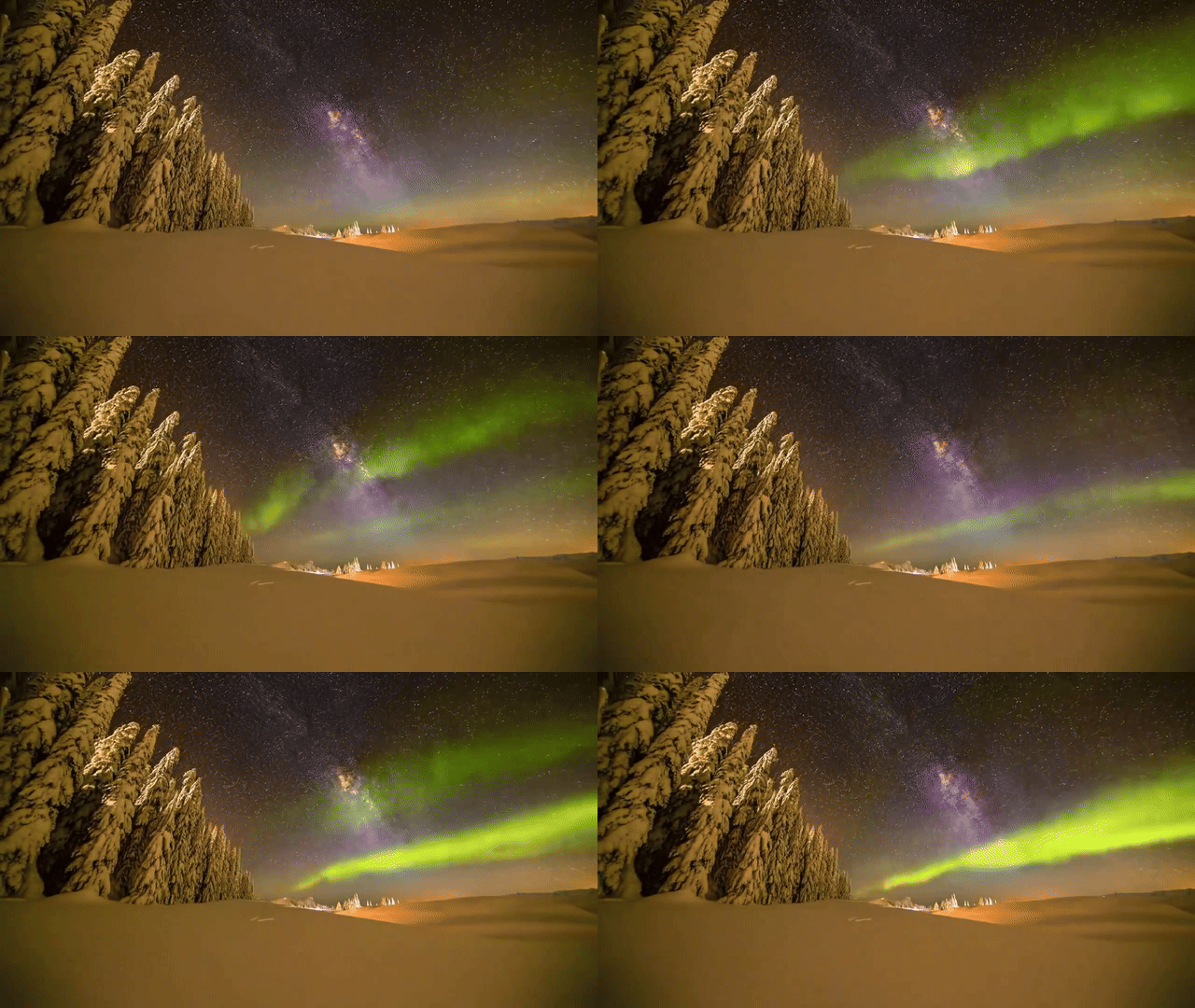
Google's AI lab DeepMind has dropped a number of videos showing off its new Veo artificial intelligence video platform. This is Google's answer to OpenAI Sora.
The videos show the potential of the system, accessible through the VideoFX lab project on Google Labs. The shots include different camera angles and techniques users will be able to play around with once the platform is widely accessible.
Rather than share a lengthy explanation, Google decided to let its videos do the talking. This includes one timelapse clip of the northern lights illuminating a snowy landscape, while another shows a panning shot of a waterfall in the heart of a forest.
What is Veo?
Our video generation model Veo gives more control over the camera. 📹You can prompt for:🔘 Extreme close up🔘 Slow-motion crane shots🔘 TimelapsesAnd more. 🧵✍️ Prompt: “Timelapse of the northern lights dancing across the Arctic sky, stars twinkling, snow-covered… pic.twitter.com/aMwfts0QqOMay 21, 2024
✍️ Prompt: “A panning shot of a waterfall cascading down a rocky cliff, lush greenery surrounding the falls, mist rising from the crashing water.” pic.twitter.com/0ncBZtc3XjMay 21, 2024
Veo is Google's most capable video generation model to date. While not yet fully available to all users worldwide, Veo can create 1080p videos over a minute long in a wide range of cinematic and visual styles.
Users in the U.S. can sign-up to join the waiting list for VideoFX to turn text prompts into AI videos powered by the Veo model.
The company says Veo "accurately captures the nuance and tone of a prompt, and provides an unprecedented level of creative control — understanding prompts for all kinds of cinematic effects, like time lapses or aerial shots of a landscape."
Multiple styles and videos
✍️ Prompt: “Extreme close-up with a shallow depth of field of a puddle in a street, reflecting a busy futuristic Tokyo city with bright neon signs, night, lens flare.” pic.twitter.com/ZDxWdC6rUiMay 21, 2024
One of the shared videos on X revealed a close-up of a puddle reflecting Tokyo’s dazzling lights at night. This showed Veo’s versatility, capturing the right tone and mood of this classic setting.
Another video featured an aerial shot of a lighthouse surrounded by waves crashing against the surrounding cliffs.
This could be a perfect choice for an establishing shot for movie directors who don’t have access to a drone. This tallies with Veo’s goal to create tools that make video production accessible to everyone.
✍️ Prompt: “An aerial shot of a lighthouse stands tall on a rocky cliff, its beacon cutting through the early dawn, waves crash against the rocks below.” pic.twitter.com/5K5QZ9UZ6NMay 21, 2024
On X, Google DeepMind wrote that its newly released videos were “raw, unedited outputs.” They were also accompanied by rather simple prompts written in plain English – the clip of the lighthouse was generated using a two-line prompt.
It specified that users would be able to create shots including extreme close-ups, slow-motion crane shots, and timelapses. However, it added that there are also many other possibilities in addition to these techniques.
More from Tom's Guide
- Google Veo — 5 amazing videos made by the new AI video generator
- Google revealed new AI tools to make music, video and images at I/O — here's how to get access
- Google I/O 2024 announcements — all the big Gemini AI and Android 15 news