




I first started reviewing robot vacuums six years ago, which means I've watched them progress from bumbling overpriced frisbees to genuine household helpers. While early robot vacuums often bumped their way around my living room, gobbling up wires and spreading messes in their wake, the smartest models you can buy in 2026 offer AI-driven obstacle avoidance, retractable mops that can scrub away dried-down dirt, and "all-in-one" stations that empty the dust, wash the pads with hot water, and even refill their own tanks.
In other words, if you've been holding off, I really think 2026 is the year to make the switch to robot vacuuming. And if it's been a few years since you've upgraded, the latest tech could seriously change your cleaning routine.
But which to buy? Well, that's where I come in. As I said, I've been testing the good, the bad and the ugly in robot vacuums for six years, and I've carefully whittled down dozens of robot vacuum reviews into our top six picks.
The best overall? That's got to be the new Dreame X60 Max Ultra Complete. However, it's not a cheap pick, which is why I recommend the sub-$300 Dreame D10 Plus Gen 2 for those on a budget.
For the nitty-gritty, as well as my other four top picks, just keep reading.
You've likely seen the news that the US is banning all new foreign-produced "advanced robotic devices" from being sold and marketed in the US. The FCC defines an "advanced robotic device" as "a mechanical mobile device weighing over 4.4 pounds (including its ground or docking station) that is capable of locomotion, navigation, and obstacle avoidance and can be operated from a distance". This covers the vast majority of robot vacuums on the market. Another key part of the ban is that it targets foreign-produced robot vacuums specifically. This means that it does not matter where the company that sells these devices is based; if the device itself is produced outside of the US, it is subject to the ban. This doesn't stop retailers from selling robot vacuums that have already been approved by the FCC, and all robot vacuums currently for sale in the US have been approved by the FCC. However, if a manufacturer wants to sell a new model that has not been authorized, they must apply for conditional approval to prove its products do not "pose a risk to national security". Additionally, all robotic devices already authorized for US sale will continue to receive software and firmware updates that "mitigate harm to US consumers" (e.g., software vulnerability patches) until January 2029.
The best robot vacuums you can buy
Why you can trust Tom's Guide Our writers and editors spend hours analyzing and reviewing products, services, and apps to help find what's best for you. Find out more about how we test, analyze, and rate.
Best robot vacuum overall


✅ Removing tough stains is your priority: The Dreame X60 Max Ultra Complete delivered outstanding vacuuming and mopping results in our testing, even on dried soy sauce and mud.
✅ Pure vacuuming power is top of your wish list: When it comes to sheer vacuuming power, there's not much competition.
✅ You're looking for an easy-to-use app: Mapping took under 10 minutes, and the DreameHome app made scheduling and customizing cleaning routines simple.
❌ Your floor space is quite limited: The X60’s base station can be tough to accommodate in smaller homes or utility areas.
❌ You expect an entry-level price point: The X60 is priced higher than most budget robot vacuums, though it offers superior cleaning and convenience.
The Dreame X60 Max Ultra Complete is hands-down the best robot vacuum we've tested in 2026. It impressed across the board, picking up all manner of debris, including hair and flax tiny seeds, and achieved excellent mopping results with no mess or sticky residue left behind, even on tough stains like dried soy sauce and mud.
We did observe a small reduction when tackling hair and larger debris on carpets, but with a maximum suction power of 42,000 Pa, few other models in our guide would put up much of a fight when it comes to sheer cleaning power.
The vacuum comes with a small brush that attaches to clean baseboards as it moves around the edges of the room, ensuring corners and wall lines aren’t neglected. The self-emptying dock handled an entire week of debris in our high-traffic test area without intervention, and its automated mop washing and drying features kept the mop pads clean and odor-free, even after multiple uses.
Setup was fast and straightforward. In general, we've always rated the DreameHome app, with all functions presented in a digestible, non-overwhelming way. We were able to set schedules, create no-go zones, and check cleaning history with just a few taps.
Against the Dyson Spot+Scrub, the Dreame mopped more effectively and required less user intervention, but the Dyson handled pet hair slightly better. While the X60’s price is higher than most budget models, it matches or outpaces rivals in cleaning power and convenience. There are a few practical drawbacks. The dock is bulky and requires more floor space than most rivals, so placement can be challenging in smaller homes or tighter utility areas.
| Row 0 - Cell 0 | Rice Krispies |
Flax Seeds |
Pet hair |
Linoleum |
100 |
100 |
100 |
Carpet |
100 |
98 |
96 |
Read our full Dreame X60 Max Ultra Complete review
Best robot vacuum for pet hair


✅ You struggle with daily pet shedding: If pet hair is a daily struggle, the Saros 20 reliably lifts fur from both carpets and hard floors, outperforming most rivals in our tests.
✅ Tangled hair brushes frustrate you: The Saros 20’s dual-tangle brush system means less hands-on maintenance, staying cleaner in homes with lots of shedding.
✅ Obstacle avoidance is a priority: The Saros 20 effectively dodges toys, bowls, and pet obstacles, so you can trust it to finish the job.
❌ Spotless one-pass mopping is a must for you: The Saros 20’s mop often missed patches and left visible streaks in our lab tests—look elsewhere if mopping is a top priority.
❌ You're on a budget: While cheaper models can struggle on pet hair, there's no denying that the Saros 20 is a premium pick.
If you’re tired of battling pet hair stuck in your carpet or wrapped around your robot’s brush, the Roborock Saros 20 delivers a real solution. In our tests, its astonishing 36,000 Pa of suction power (the highest in this guide) made a noticeable difference in pulling up pet hair. Its dual-tangle brush design worked reliably to keep fur from winding around the roller, even after heavy use in a home with multiple pets.
The dual-tangle brush system isn’t just a spec; it shows up in daily cleaning. Over weeks of repeated sessions, we found the Saros 20 rarely needed manual brush clearing, and the vacuum consistently filled its bin with pet hair that other models left behind. Its suction remains strong on both carpets and bare floors, making it a good fit for households that constantly battle pet hair and dander.
For many pet owners, homes can often double as obstacle courses. The Saros 20 sensed errant toys and food bowls with impressive reliability, navigating around them to keep cleaning on track. In homes where pets are always underfoot, this level of obstacle avoidance takes the stress out of automated cleaning.
The one place the Saros 20 stumbles is mopping. In our trials, its mop often missed patches of dirt and left streaks behind. Buyers expecting a spotless mop finish will likely be disappointed and may need to rely on a separate mopping routine for best results. If mopping is a top priority, we suggest checking out the Dyson Spot+Scrub.
At its price point, the Saros 20 is a premium choice. Budget-focused buyers might turn to models like the Dreame D10 Plus Gen 2, or the mid-priced Roborock QV 35S, although neither can match the Saros’s pet hair pickup or obstacle avoidance.
| Row 0 - Cell 0 | Cheerios |
Kitty litter |
Pet hair |
Linoleum |
90 |
100 |
90 |
Carpet |
100 |
100 |
70 |
Read our full Roborock Saros 20 review
Best budget


✅ You want solid cleaning at a true budget price: The Dreame D10 Plus Gen 2 delivers reliable daily cleaning for less than $300
✅ You hate confusing setup and apps: Setup and mapping are fast, and the Dreame app’s simple controls make scheduling and customization a breeze.
✅ You need a robot that fits a small home: Its compact footprint and sleek look mean it won’t get in the way or clash with your decor.
❌ You want deep mopping or heavy-duty scrubbing: The D10 Plus Gen 2’s mopping is basic—fine for quick refreshes but not up to sticky or dried-on stains.
❌ You have lots of thick carpet or rugs: With lower suction and difficulty on high-pile carpet, this robot isn’t ideal for homes dominated by plush flooring.
❌ Pet hair is your main challenge: It can’t match the suction of high-end models like the Roborock Saros 20, so heavy pet fur may be left behind.
The Dreame D10 Plus Gen 2 is the best robot vacuum we’ve tested under $300, combining a truly affordable price with cleaning performance that rivals far pricier models — especially on hard floors. In our lab tests, it outperformed plenty of more expensive competitors when picking up dust, debris, and hair from wood and tile, making it a smart choice for value-focused shoppers who still want floors to look freshly cleaned, day after day.
Getting started is refreshingly simple. our tester was genuinely surprised by how quickly the Dreame mapped her space — and the results were accurate, even around furniture and in odd-shaped rooms. The Dreame home app is one of the easiest we’ve used: everything is clearly labeled, scheduling is straightforward, and there’s no lag or confusing menus to slow you down. For anyone wary of complicated tech, this is a set-and-forget robot.
The D10 Plus Gen 2 is also compact. At just 13.8 x 13.8 x 3.8 inches, it tucks neatly against a wall or under a side table and feels unobtrusive in smaller apartments. Our tester found it looked sleek in real living spaces, so you don’t have to worry about an eyesore in your entryway.
In day-to-day use, the Dreame consistently kept up with routine messes. This robot handled pet hair, crumbs, and fine dust with ease on hard floors, and impressed us by matching, if not beating, models costing hundreds more. We found its cleaning pattern efficient, rarely missing obvious debris, and the bin system simple to maintain.
There are trade-offs for the low price. The Dreame D10 Plus Gen 2 undercuts premium robots like the Shark PowerDetect UV Reveal, but gives up higher-end extras such as a UV light to reveal stains or a 60-day bagless dustbin. If you want the ultimate hands-off experience or hidden-stain detection, you’ll need to pay for it elsewhere.
The biggest compromise is in mopping and carpet performance. The D10 Plus Gen 2’s mop is very basic — fine for light refreshes, but not up to tackling dried spills or heavy grime. Its suction (6,000Pa) can’t compete with powerhouses like the Roborock Saros 20 (36,000Pa) for pet hair, and it struggles with high-pile carpets, unlike deep-cleaning options such as the Roborock Qrevo Curv 2 Pro. If you have mostly rugs or need to scrub sticky stains, this budget pick isn’t the best fit.
That said, the Dreame D10 Plus Gen 2 still feels thoughtfully designed for budget-minded users. It’s discreet, straightforward, and stylish enough for most homes—qualities our reviewer appreciated daily.
If you want dependable, everyday cleaning at a wallet-friendly price—and can live without premium bells and whistles—the Dreame D10 Plus Gen 2 is the smartest budget robot vacuum you can buy right now. For advanced mopping, deep carpet, or heavy pet hair, consider spending more on a specialized model, but for simple, reliable upkeep, this is our top value pick.
| Row 0 - Cell 0 | Cereal |
Flax Seeds |
Pet hair |
Linoleum |
100 |
100 |
95 |
Carpet |
100 |
100 |
40 |
Read our full Dreame D10 Plus Gen 2 review
Best robot vacuum for carpet


✅ You want a true all-rounder: The Shark PowerDetect UV Reveal aced our tests with a 93.1 overall cleaning score —making it a strong pick for both vacuuming and mopping.
✅ Low-maintenance is a key consideration: With a bagless dustbin that lasts up to 60 days, most users rarely need to think about emptying the bin, which makes upkeep refreshingly simple.
✅ You want to fight hidden grime: The built-in UV light exposes stains and spills you might otherwise miss, which we found unexpectedly helpful for deep cleaning.
❌ You want the latest mopping technology: The Shark Reveal did well in our mopping tests, but for a flagship robot vacuum its mop pad is surprisingly rudimentary. The Dyson Spot+Scrub offers a self-cleaning spinning mop roller, which will offer a much more advanced mopping performance.
❌ A versatile app is a top priority: Editing the map in the app can be tedious and sometimes confusing.
I've tested countless Shark appliances, and they always get the balance right between affordability and high performance. For the average person, the Shark PowerDetect UV Reveal is a top pick, with a 90% overall score in our controlled tests and incredibly strong performance in our real-world testing. It's the best on the market for most people.
Handling everyday debris and pet hair is where the Reveal truly excels. In our tests, it achieved a perfect 100 for pet hair removal. The integrated UV light made hidden stains, forgotten spills and dried-down dog dribble visible, something we tested didn't know he needed until it spotlighted a mess he’d missed under the couch.
Long-term maintenance is refreshingly simple. The 60-day bagless dustbin proved itself over weeks of use, with reviewer Jason noting that it was able to keep up seamlessly with his 1,300 square foot floorplan — the battery proving sufficient for cleans exceeding two hours. If you're dealing with a larger floorplan, it's up to the task.
While it's not the most premium or the best value option in this guide, we do think it's the best option for carpeted floors. While on paper, the lower score on with kitty litter on carpeted floors might hold it back, our reviewer noted that his carpets are unusually deep and was impressed with the UV Reveal's performance across the board. As the brand so often does, the Shark PowerDetect UV Reveal strikes a smart balance. Its mop pad isn't the most advanced on the market compared to the likes of the Dyson Spot+Scrub, but it does offer the self-cleaning and drying features we're seeing on flagship models in 2026. As for the UV-reveal light, that's a feature we've not seen before in our countless robot vacuum reviews.
The Shark PowerDetect UV Reveal is a great fit for buyers after reliable, whole-home cleaning with minimal upkeep.
| Row 0 - Cell 0 | Cheerios |
Kitty litter |
Pet hair |
Linoleum |
99 |
98 |
93 |
Carpet |
97 |
55 |
100 |
Read our full Shark PowerDetect UV Reveal review
Best robot vacuum and mop hybrid


✅ You tackle sticky spills and dust simultaneously: The Dyson Spot+Scrub Ai handled dried-on food stains and sticky messes in our tests, delivering true dual-purpose cleaning that many hybrids miss.
✅ You find manual maintenance a chore: Its bagless, self-emptying dock means you don’t need to buy bags or empty a dustbin after every run, streamlining upkeep for busy households.
✅ Babysitting your robot frustrates you: Mapping was precise and setup a breeze, and once the Dyson was running, testers rarely needed to intervene—so targeted cleaning is easy and dependable.
✅ You want a simple, fuss-free interface: The Dyson’s simple controls and low-maintenance design mean it works quietly in the background without constant attention, making it ideal for hassle-free cleaning.
❌ Your floor plan has tight spots: The Dyson is physically larger than most robot vacuums, so it’s less suited for homes with cramped layouts or low furniture.
❌ Finding a low-cost hybrid matters to you: This isn’t the cheapest hybrid robot out there, so shoppers on a tight budget may want to consider other options.
If you want a robot that truly vacuums and mops, the Dyson 360 Vis Nav Spot+Scrub Ai stands out for tackling dried-on messes, including stubborn kitchen stains, where many hybrids struggle. In our tests, it wiped away dried sauce and sticky spills with a single pass, giving it a clear edge in real-world mopping effectiveness.
What sets the Dyson apart is its mopping system. It uses high-temperature water, which helps break down grime and leaves floors feeling hygienic. And unlike any other vaccum featured in this guide, its rolling mop bar is constantly fed with a flow of clean water, meaning it's more likely to pick up dried-down messes, and less likely to spread dirt around your floors.
I tested this vacuum in my own home, and found that wherever the Dyson cleaned, it picked up dust and debris impressively well, handling everything from crumbs to long strands of hair without issue. Suction is only ok, though. With 18,000 Pa, it's not quite so powerful as the similarly-priced Roborock Qrevo Curv 2 Pro.
Navigation is another win. Mapping was accurate even in oddly shaped rooms, and setup was quick. I barely had to intervene after initial setup, a testament to how little hands-on maintenance is needed once it’s up and running, and in my continued daily use it very happily navigates around obstacles and changing floorplans with no drama.
For busy homes, the bagless, self-emptying dock is a genuine convenience. It automatically empties debris, reducing touch points, so you don’t have to worry about changing bags or frequent emptying. Still, there are trade-offs. The Dyson is larger than most robot vacuums, so it’s more noticeable in the room and may not fit under every piece of furniture. Its drying cycle after mopping can be noisy and takes longer than you might expect, which may bother those sensitive to sound or who need quick turnaround times between cleans.
The Spot+Scrub Ai is best for buyers who want strong, consistent hybrid cleaning and minimal daily fuss. If you don’t need every bell and whistle but value real mopping performance and low-maintenance vacuuming, this robot nails the hybrid brief.
| Row 0 - Cell 0 | Cheerios |
Kitty litter |
Pet hair |
Hardwood floor |
92 |
95 |
100 |
Carpet |
95 |
90 |
100 |
Read our full Dyson Spot+Scrub Ai robot vacuum review
Best value robot vacuum



✅ You want a good value cleaner that really works: The QV 35S cleaned up most visible debris on hard floors in our tests, delivering reliable daily results at a reasonable price.
✅ Complex navigation and controls frustrate you: With reliable obstacle avoidance and easy app mapping, the QV 35S is simple to set up and use, even in cluttered or unmapped spaces.
✅ You're looking for low-maintenance cleaning: Setup takes minutes, and the self-emptying dock means you’ll rarely have to deal with daily dustbin dumps or complicated maintenance.
❌ Deep cleaning and pet hair matter to you: The QV 35S isn’t as effective as pet-focused models on thick carpets or for picking up heavy pet hair, leaving behind more fuzz and debris.
❌ You expect advanced mopping or luxury features: While it has a self-emptying dock, the QV 35S lacks advanced mopping and premium dock features
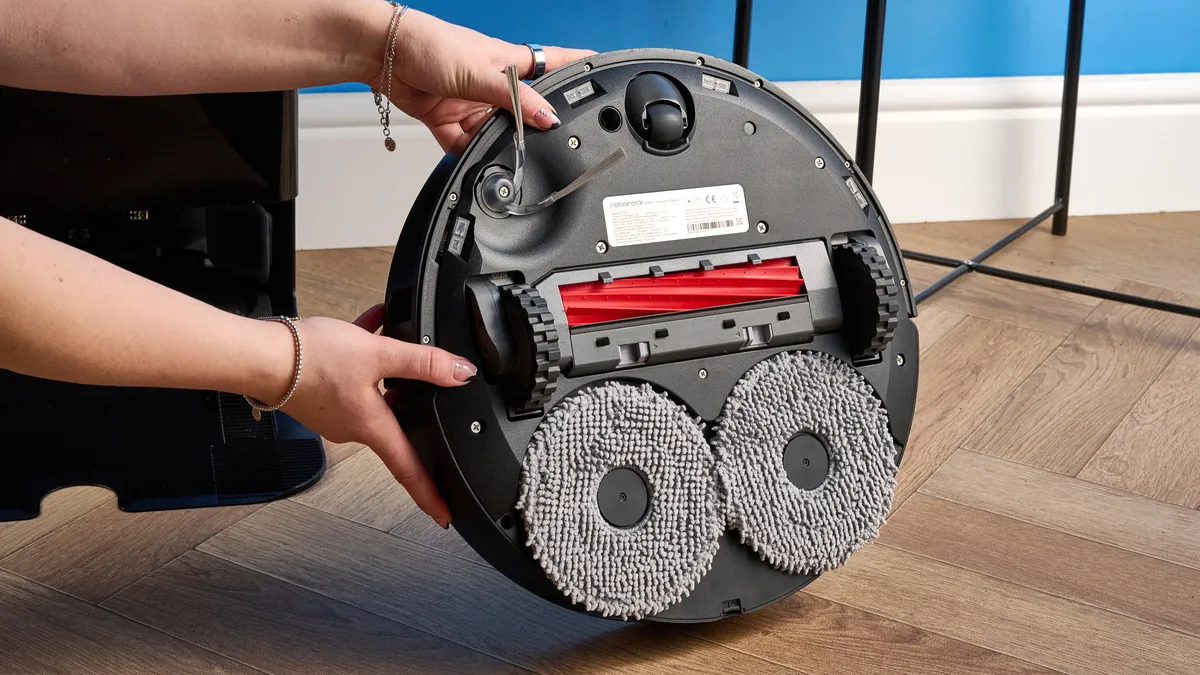
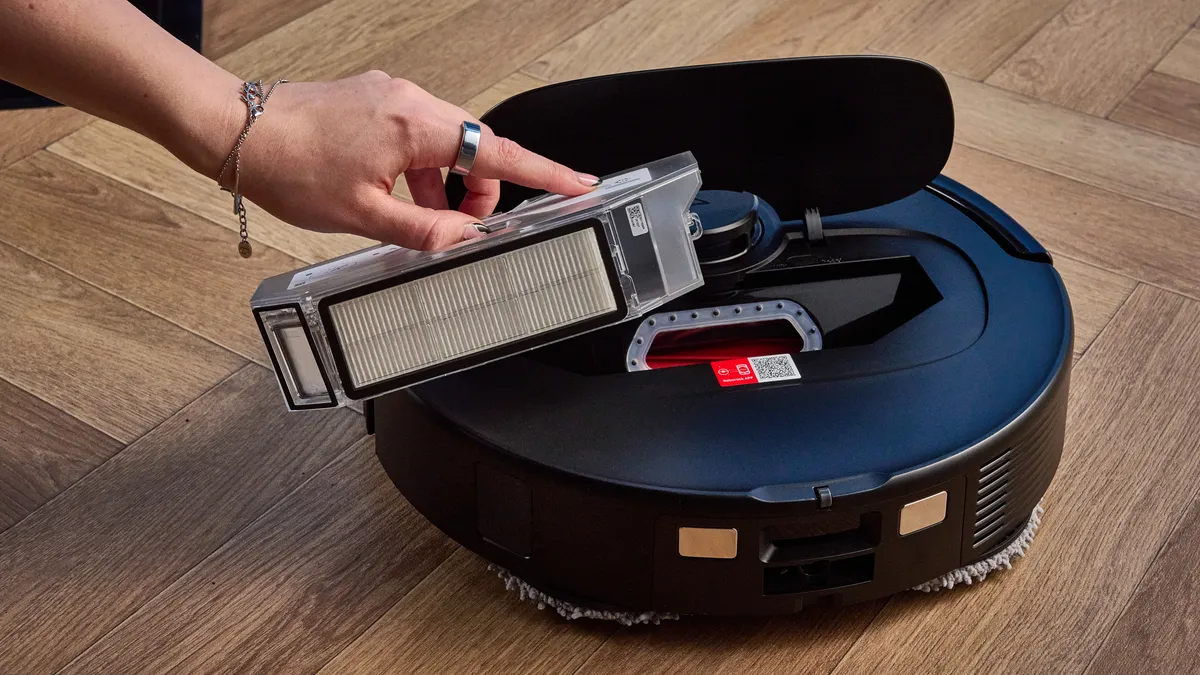
While the Ecovacs Deebot is still our top pick for budget buyers, if you can afford to splash out on some key extras, you'll see the difference with the Roborock QV 35S. For one, it has a self-emptying dock, and its spinning mop pads are a big step up compared to the likes of the Deebot's basic pad.
When we tested the QV 35S on hardwood floors, its 10,000Pa suction was impressive, pulling up nearly all visible debris in a single pass. In home use, it rarely left behind dust bunnies or tracked-in grit, a level of performance that’s unusual for entry-level bots. You'll need stronger suction for deep-pile carpets, but it also fared well on shallow rugs, picking up an average 84% of debris across our three tests.
Navigation is another high point. The QV 35S proved adept at maneuvering around chairs in our testing area, rarely getting stuck or confused even when running with no pre-set map. While it has a bumper on the front, reviewer Ashley noted that she never saw the Roborock use it due to its excellent sensors.
Ashley also enjoyed using the Roborock app during testing. Its mapping process took under 15 minutes, and controls stayed intuitive throughout. Its 180 minutes of battery life is also impressive, and the QV 35S could comfortably cover large areas on a single charge.
The QV 35S includes a self-emptying dock and performs well on hardwood floors. You’ll give up advanced mopping and luxury extras, but for the money, this bot automates the basics better than most.
| Row 0 - Cell 0 | Cereal |
Flaxseed |
Pet hair |
Hardwood floor |
98 |
98 |
92 |
Carpet |
93 |
99 |
60 |
Read our full Roborock QV 35S review
Also tested
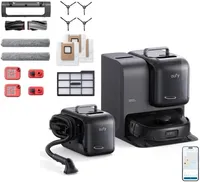
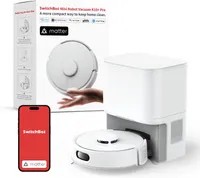
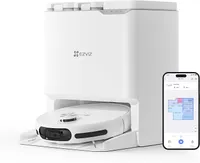
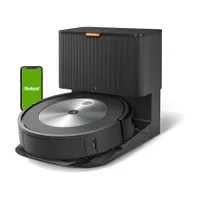
We've tested many robot vacuums at Tom's Guide. While most perform great, they aren't as easy to recommend for everyone. That's due to a lack of features at higher prices or more niche use cases that aren't as versatile as the top models in our list. Still, the models below are worth checking out if money isn't an issue.
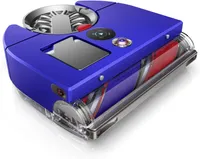
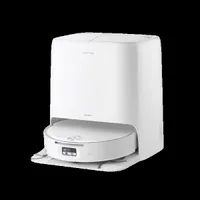
How we test


Over the past 10 years, we've tested dozens of robot vacuums, both by performing objective tests as well as real-world setups.
Each model we review is first evaluated to see how well it can pick up three types of debris. We measure out 20 grams of Cheerios, 20 grams of kitty litter, and 20 grams of pet hair.
Next, we scatter each individually across a hardwood floor, and then weigh the contents of the robot vacuum's dustbin to see how much of each it picked up. We then repeat the same three tests on a low-pile carpet. Afterwards, the robot vacuum receives a cleaning performance score, which is the percentage of debris it was able to collect.
After we record each robot vacuum's scores, we let these machines loose in our tester’s home to see how each holds up in terms of navigation, obstacle avoidance, and coverage in real-world testing. Any special features such as app control, mopping functions, and self-emptying bases are factored in too. This all adds up to weeks of testing; it takes time, but helps ensure we're evaluating them all properly.
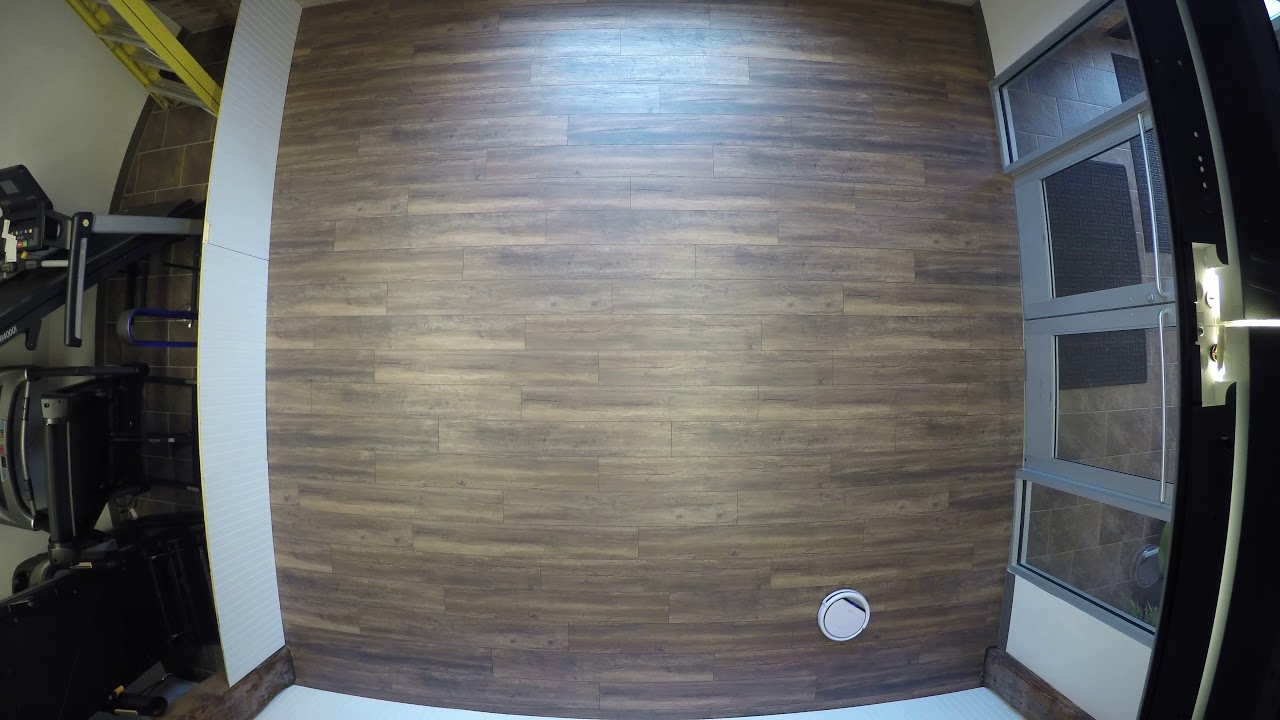
After extensive testing, we’ve compiled several buying guides to showcase our results, including the best Roombas, the best cheap robot vacuums and the best robot mops. We can even tell you what it's like when you use a robot vacuum in your home for the first time. So if you want to know more about robot vacuums so you can decide if one is right for you, you’ve come to the right place.
How to choose the best robot vacuum

Before you start shopping for a new robot vacuum, you should consider what you need from it and how much you’re happy to spend. Here are some of the most common features you can find in robot vacuums.
Carpets or hardwood?
Most robot vacuum models can easily handle cleaning both carpets and hardwood, but some are better at cleaning one or the other. Higher-end robot vacuums can accommodate rapid surface changes by folding its mop pad atop itself and ramping up power whenever carpet is detected, and then throttling back down when it senses hardwood. Rugs should also factor into your buying decision. You might find that lower-end models will get caught up in tassels.
What features do I need to look for?
Features to look for include whether it has Wi-Fi compatibility. Most robot vacuums can connect to your smartphone via Wi-Fi, but some lower-end models don’t have this option. However, you can control and monitor your robot vacuum from your phones.
Additionally, battery life is important to consider and this will depend on your usage and settings. If you opt for a model which comes with a base, it can self-charge between runs. Plus, the dust canister needs to be a sufficient size. Look for a minimum of 400ml. The smaller the dustbin, the faster it will fill.
Another handy feature is a self-emptying base. Once the robot vacuum’s dustbin is full, it will return to its charging dock to ‘self-empty’. This is then stored in the dock until this larger bin is full and needs emptying, which you will need to do, usually once a month or less, depending on how often your robot vacuum cleans.
What is a "hybrid" robot vacuum?
Some robot vacuums also have a mopping function, so you can more effectively clean your hardwood floors and tiles without needing one of the best robot mops. More importantly, it will save you the back-breaking chore of using a traditional mop and bucket!
Mapping functions
Most smart robot vacuums can map-out your home using sensors, so they can remember any obstacles, such as the stairs, and let you identify specific rooms/multiple floors.
Some models allow you to set no-go zones if there’s certain areas you want to avoid, targeted rooms or particular areas.
Scheduling features
This is quite a common feature for robot vacuums. By connecting with your smartphone app, you can schedule when you want it to clean, be it daily, weekly or when you’re not at home.
Robot vacuum FAQs
Should you get a self-emptying base?
Premium robot vacuums often come with self-emptying charging bases. These start from about $500 and can go as high as $1,400 with the latest features. There are lots of benefits to getting a self-emptying base. First, your robot vacuum can literally self-empty, so if the onboard dustbin is filled mid-route, it can empty itself and then continue cleaning uninterrupted. A self-emptying base saves you from the chore of emptying the dustbin so often as well, with most bases able to hold a minimum of 45 days of dust.
If your robot vacuum has a mopping function, some bases come with water tanks and scrubbing abilities as well, so it can keep the mop cloth clean. However, there are some drawbacks to self-emptying bases. Besides the additional cost, these take up a lot more floor space.
Can a robot vacuum replace a normal vacuum?
Robot vacuums have improved tenfold since they were first introduced, both in terms of navigation and pickup. And while the gap between these devices and upright models is indeed closing, there is still admittedly a gap. Robot vacuums do not offer as strong a performance as upright vacuum cleaners, particularly corded ones. It’s for this reason that we don’t recommend throwing away the best vacuum cleaner even if you decide to invest in one of these strong contenders.
Robot vacuums are recommended more for light, everyday cleaning, rather than for handling really embedded debris. So, ideally you will still want to run your regular vacuum every so often, while the robot vacuum helps keep dust down in the interim. By keeping on top of the light debris, you won’t need to use your full-sized vacuum so often.
Where should I place my robot vacuum?
First and foremost, you should follow the directions in your instruction manual for where to place the robot vacuum. While most will offer similar guidance, the measurements required can vary, and some designs may prefer a greater clearance. Generally speaking though, your robot vacuum should be placed against a flat and straight wall on a level surface, with around 3 ft of clearance on each side, and at least 4 ft in front. This is so that it has adequate space to start cleaning and dock on re-entry, without any furniture getting in the way. Don’t forget that it needs access to a power socket as well.
If you’re using a standard charging base, you may have to fix it to the wall, so the robot vacuum won’t knock it out of place. Some bases come with stickers to help with this issue. If you’re lucky enough to own a robot vacuum with a self-emptying base, it should be heavy enough to hold itself in place. Although this does mean it will likely require more clearance space and will protrude further out from the wall as well. Make sure you have a space in mind for your robot vacuum’s dock before you make a purchase, otherwise you might have to move some furniture around.
What happens if my robot vacuum manufacturer goes bankrupt?
With the news of Roomba manufacturer iRobot filing for bankruptcy, many robot vacuum owners are concerned that the same could happen to their manufacturer.
In the case of iRobot, it was eventually bought by Chinese manufacturing company Picea (which iRobot had previously worked with as a contract manufacturer), following Chapter 11 bankruptcy. So, iRobot is now completely held by Picea, and as such, it is a privately held company.
There were concerns that this acquisition could spell the end for Roomba products, with users worried about long-term impacts to app functionality. iRobot has said that it does not believe that its bankruptcy will have a negative effect on app functionality, customer programs, global partners, supply chain relationships, or product support. Still, concerns regarding app updates and whether or not spare parts will continue to be available remain.
These are the same issues that may arise if your robot vacuum manufacturer goes bankrupt. Still, none of the producers on this list appear to be at risk at the time of writing.
If you are concerned about potentially losing access to your robot vacuum if its manufacturer goes bust, it's a good idea to invest in one that can be programmed or controlled in a way other than an app. This will allow you to continue using your robot vacuum even if the app ceases to function.

