



Editors' Note: Updated at 6:35 p.m. ET to note a second patent ruling issued by the ITC today.
A U.S. International Trade Commission judge believes some iPhone models should be banned from sale in the U.S. after Apple was found to have infringed on key Qualcomm patents.
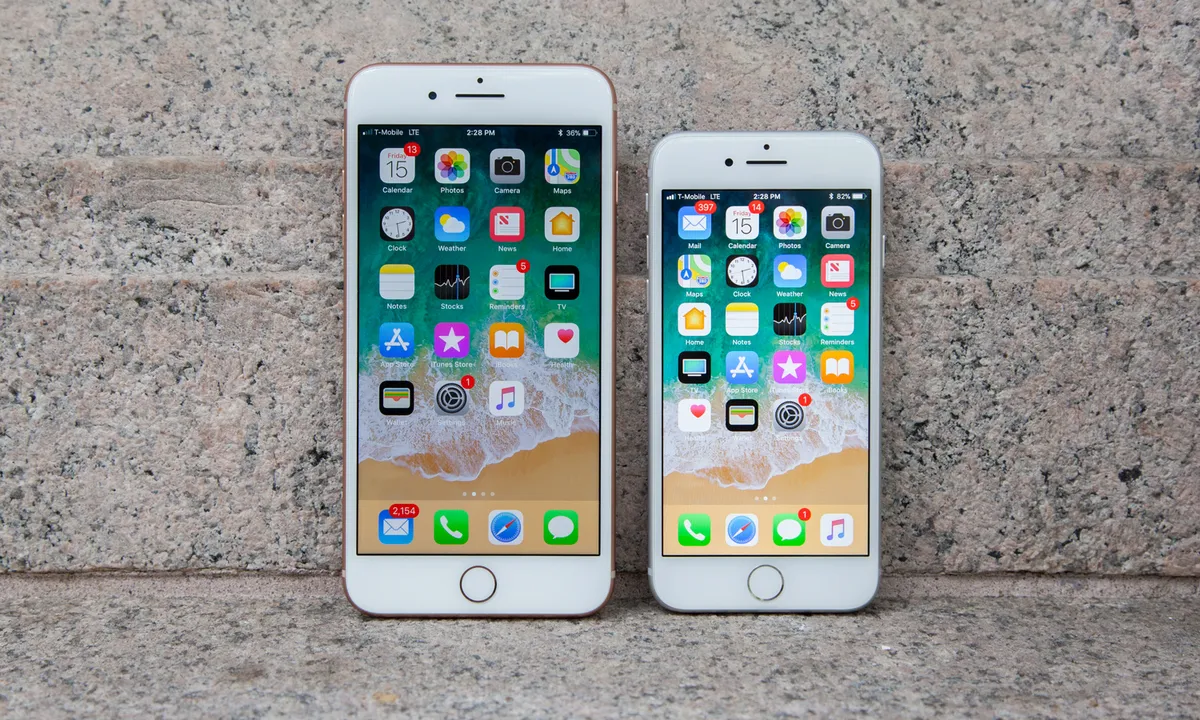
Although it's unclear precisely which iPhone handsets would be affected by today's ruling, first reported by Bloomberg, the ITC is pointing the finger at models containing Intel modems that utilize a specific kind of power-saving technology. The full commission will review Judge MaryJoan McNamara's decision; if it agrees, the iPhones in question will be locked out of sale in the U.S. until Apple complies with the court's orders.
Despite McNamara's recommendation, Apple also got some good news from the ITC on Tuesday: In a separate ruling that covered a wider range of iPhones, the ITC invalidated a patent claim by Qualcomm against Apple.
Besides illustrating how wide ranging the Apple-Qualcomm dispute is, the ITC's findings are the latest chapter in a saga that began when Apple sued Qualcomm for $1 billion in January 2017 over what it argues are unjustifiable licensing practices. Qualcomm promptly countered with its own lawsuits against Apple, and this past December the chip maker successfully halted the sale of some older iPhone models in Germany — namely the iPhone 7 and 8 — after a Munich court also found that the Cupertino tech giant infringed on one of Qualcomm's patents. For what its worth, German courts have dismissed four other infringement claims from Qualcomm against Apple.
It was the iPhone 7 and 8 that were also at the forefront of injunctions levied against Apple by a Chinese court, also last December. However, Bloomberg reports that the patent involved in McNamara's decision specifically cites the iPhone 7 and 7 Plus.
Newer iPhones, like the iPhone XS and XR, haven't been linked to any infringement thus far, so it's unlikely that the ITC found fault with those devices' components. If an import ban is handed down in the U.S., it will probably affect older versions.
This case is one of two Qualcomm has brought before the ITC; the other is still awaiting a decision. The chip maker, whose electronics are found in an overwhelming majority of mobile devices sold around the world, claims Apple owes it licensing fees and divulged trade secrets to Intel to improve the performance of that company's modems while lessening reliance on Qualcomm. Apple, meanwhile, contends that Qualcomm is forcing clients to pay up for technologies the chip maker doesn't own, and lording over a monopoly in the process.
Both companies are due in San Diego federal court in April 15 regarding Qualcomm's licensing practices, which Apple claims is anti-competitive. As for the ITC's case, Judge McNamara's import ban recommendation is still pending committee approval and review from President Donald Trump.
