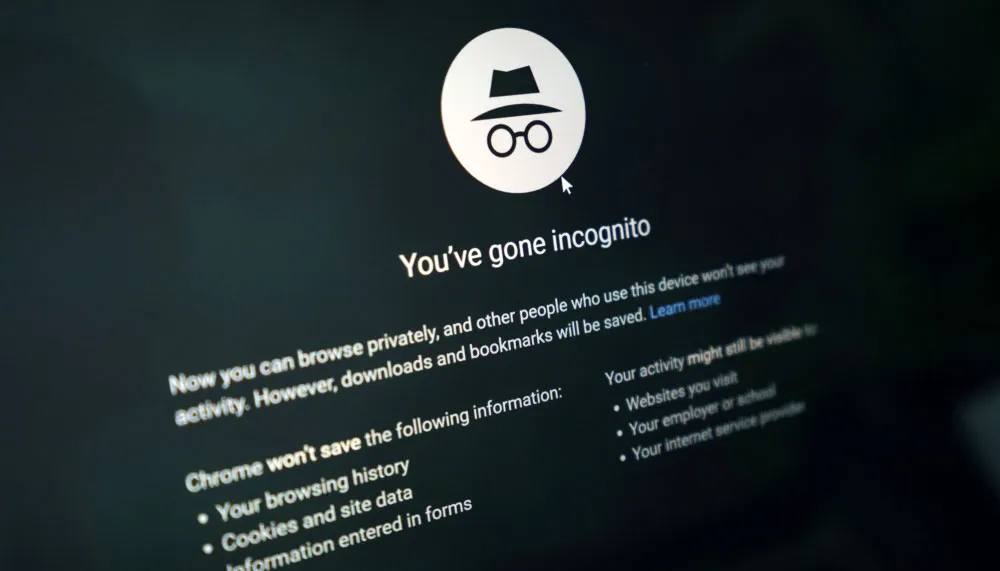
Back in January Google admitted what a lot of us had already suspected for several years — that Chrome’s Incognito mode is not actually private. So while Incognito Mode doesn’t store any browsing history on your machine itself, Google was still tracking users behind the scenes. But the company has just promised it will be destroying all that information.
This has all come about thanks to a class-action lawsuit that Google settled at the end of last year. The suit alleged that Google had been collecting user data in Incognito mode, and misled users about how user data was tracked and collected. As a result of settling Google is making some changes to how Incognito mode works — including morte transparency about how your browsing is tracked online.
But first that means destroying the data collected from millions of users, all of which were using Incognito mode at the time. According to the Wall Street Journal this includes “billions of data points” from users that used Incognito Mode since 2016.
Google will also be updating disclosures on what data is collected in the so-called private browsing mode, as well as giving them the option to disable third-party cookies. This will be the default setting in Incognito mode for the next 5 years.
Discovery for the case also revealed Google executives were aware of the potential issues that Incognito misconceptions could cause. Chief marketing officer Lorraine Twohill even warned Google CEO Sundar Pichai that the company shouldn’t be referring to Incognito mode as “private” because it ran the risk of “exacerbating known misconceptions”.
The settlement doesn’t include any damages for individuals affected by Incognito Mode tracking, though it does allow for individuals to file their own claims.
The settlement doesn’t include any damages for individuals affected by Incognito Mode tracking, though it does allow for individuals to file their own claims. Plaintiff attorneys have already filed at least 50 of those claims in California state court, according to the WSJ. The original lawsuit was seeking $5,000 for each affected user, but it’s unclear how much individual claimants may be awarded if their claims are successful.
For now just be happy that Google is set to delete all the data it may have collected on you during your Incognito browsing sessions. Though it may be small comfort considering the information dates back 8 years, and could have been used for any number of things in that time.
And as much as things may be changing going forward, remember that Incognito mode isn’t a substitute for adequate internet privacy. It may stop your browsing history being saved onto a shared computer, but it’s not going to be able to keep you anonymous online.
More from Tom's Guide
- Gmail just rolled out new security rules — what you need to know
- Apple AirPods Max 2 and cheaper AirPods Lite just tipped to launch this year
- More iPhones could get iOS 18 than we thought — what we know