
Is Microsoft ditching OpenAI? — MAI-1 is the company’s first home-grown LLM that could power Copilot
Microsoft takes its AI in-house.
Here at Tom’s Guide our expert editors are committed to bringing you the best news, reviews and guides to help you stay informed and ahead of the curve!
You are now subscribed
Your newsletter sign-up was successful
Want to add more newsletters?
Daily (Mon-Sun)
Tom's Guide Daily
Sign up to get the latest updates on all of your favorite content! From cutting-edge tech news and the hottest streaming buzz to unbeatable deals on the best products and in-depth reviews, we’ve got you covered.
Weekly on Thursday
Tom's AI Guide
Be AI savvy with your weekly newsletter summing up all the biggest AI news you need to know. Plus, analysis from our AI editor and tips on how to use the latest AI tools!
Weekly on Friday
Tom's iGuide
Unlock the vast world of Apple news straight to your inbox. With coverage on everything from exciting product launches to essential software updates, this is your go-to source for the latest updates on all the best Apple content.
Weekly on Monday
Tom's Streaming Guide
Our weekly newsletter is expertly crafted to immerse you in the world of streaming. Stay updated on the latest releases and our top recommendations across your favorite streaming platforms.
Join the club
Get full access to premium articles, exclusive features and a growing list of member rewards.
Microsoft is reportedly training an in-house large language model called MAI-1. This is a big departure for the company, having previously focused on investing in OpenAI and using its models including the massive GPT-4 family of AIs to power the various Microsoft Copilot products.
The move would make sense as it will give Microsoft more control over the technology, and follows the hiring of Mustafa Suleyman, a former Google AI chief and founder of the Inflection AI lab. Despite Suleyman and his team joining Microsoft, the MAI-1 LLM is expected to be an entirely new model.
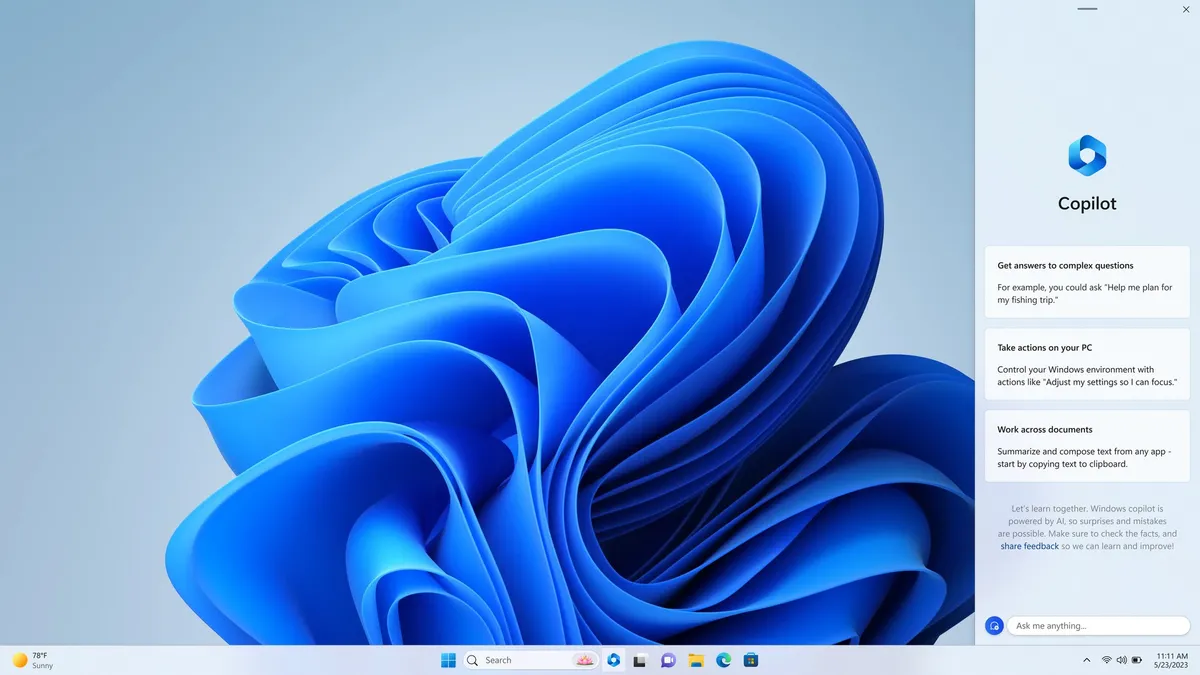
The report comes via The Information and follows Microsoft's sizeable investment of over $10 billion in OpenAI for the rights to use the company's AI models. This could, however, mean GPT-4 will no longer power Copilot, Microsoft's consumer-facing chatbot that's found on the Windows 11 desktop.
Microsoft hedges its bets on AI future
If the report is correct, Microsoft may be testing the waters by building two large language models at once.
While chatbot-style interfaces have risen in popularity, they have sizeable running costs because of the amount of data being transferred. There's also a question mark over the privacy of queries that are sent to external servers for processing.
While many, including Apple for its upcoming iOS 18 release, are working on processing the data on-device, the sheer size of LLMs (large is in the name, after all), makes this a tricky process.
By splitting its focus between a smaller-scale LLM and one more ambitious overarching one, Microsoft may be able to offer the best of both worlds.
Get instant access to breaking news, the hottest reviews, great deals and helpful tips.
More from Tom's Guide
- AI models are getting better at grade school math — but a new study suggests they may be cheating
- OpenAI says ChatGPT will be so good within a year we will talk to it like a human
- YouTube Music extension coming to Google Gemini — how it works

Lloyd Coombes is a freelance tech and fitness writer. He's an expert in all things Apple as well as in computer and gaming tech, with previous works published on TechRadar, Tom's Guide, Live Science and more. You'll find him regularly testing the latest MacBook or iPhone, but he spends most of his time writing about video games as Gaming Editor for the Daily Star. He also covers board games and virtual reality, just to round out the nerdy pursuits.
- Ryan MorrisonAI Editor
