





Apple's holiday quarter wasn't its usual festive self, as the tech giant reported yesterday (February 2) that its quarterly revenue slumped 5% from the previous year. And iPhone 14 sales certainly didn't help.
The three months ended December 31, 2022, marked Apple's first full quarter with sales of all four iPhone 14 models, and it's safe to say the new phone fell short of sales expectations. While Apple tallied a little less than $65.8 billion in iPhone sales from October through December, that figure dropped 8% from the year-ago quarter.
iPhone 14 Pro supply constraints
Apple cited three factors that contributed to its first year-over-year drop in sales since 2019. Currency exchange rates proved unfavorable to Apple as did the overall economic climate. Specifically, on the iPhone front, Apple said that it was impacted by Covid-19-related closures of assembly plants in China that left it without enough iPhone 14 Pro models to meet demand.

"We had significantly less iPhone 14 Pro and iPhone 14 Pro Max supply than we planned, causing ship times to extend far beyond what we had anticipated," said CEO Tim Cook, adding in an analyst call that "production is now back where we want it to be."
Certainly, it was hard to get your hands on an iPhone 14 Pro or iPhone 14 Pro Max from early November through the end of 2022, and that would obviously be a drag on Apple's overall performance. But I wonder if demand for Pro models was that high because would-be shoppers were so underwhelmed by the standard iPhone 14 and iPhone 14 Plus models.
The iPhone 14 enthusiasm gap
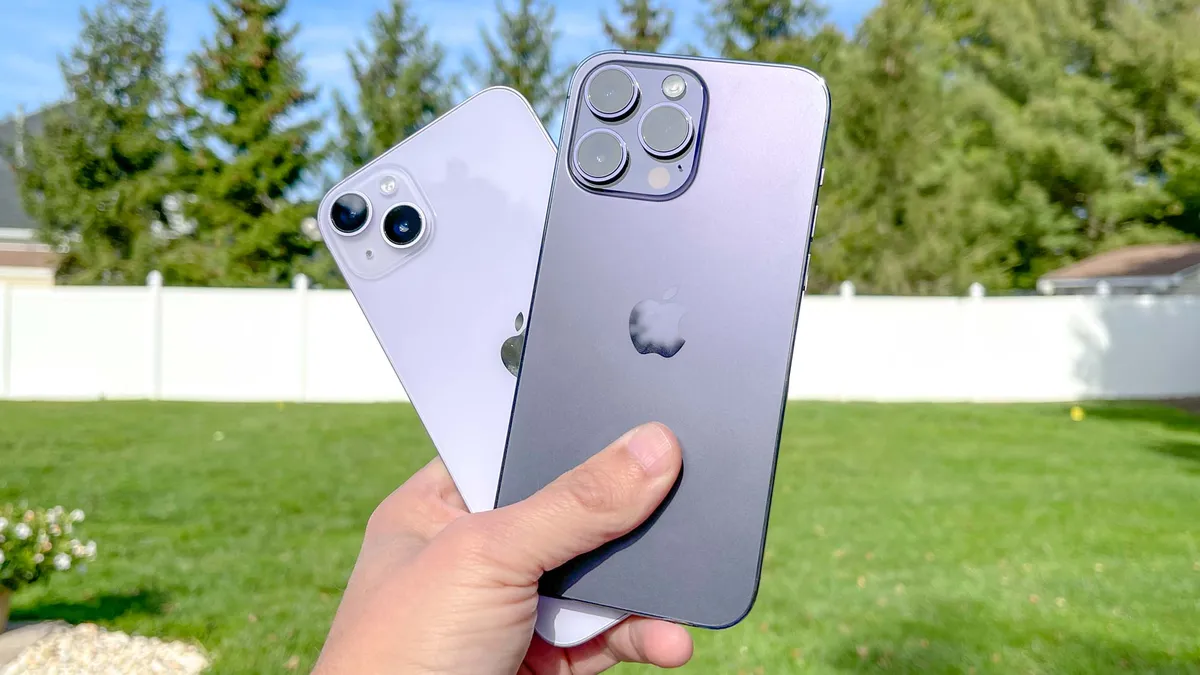
Any iPhone 14 vs. iPhone 14 Pro comparison would conclude that the Pro phones saw the most substantial changes last fall. The iPhone 14 Pro is powered by a new chipset instead of the A15 Bionic silicon found in 2021's iPhone 13 releases. Both the iPhone 14 Pro and iPhone 14 Pro Max also saw serious camera upgrades, while the regular iPhone 14 underwent a more modest change. And that's on top of features like a fast refreshing display that Pro models have long enjoyed.
Put another way, iPhone customers had plenty of incentive to want to get their hands on an iPhone 14 Pro. And when that wasn't possible due to supply constraints, they had every reason not to settle for an iPhone 14.
That's essentially what one analyst suggested during a call to discuss Apple's fiscal first quarter earnings. Amit Daryanani of Evercore asked Cook what kind of customer behavior Apple has seen when there have been supply constraints in the past and whether consumers opt for a cheaper device or defer their purchase until supplies return.
"It’s very hard to estimate is the real answer, because you have to know a lot of data," Cook replied. "And it’s usually only in hindsight that you have a more reasonable view of it."
A shift toward the iPhone Pro
I think people are willing to really stretch to get the best they can they can afford.
— Tim Cook
Avi Greengart, lead analyst at Techsponential, gave a more definitive answer when I put the same question to him about the apparent lack of enthusiasm for the lower-priced iPhone models. To Greengart, it's more a matter of customers deciding they want Apple's higher-end phones.
"The importance of the smartphone in consumers’ digital lives is only increasing, people are holding on to these phones for longer, and in markets like the US, there are heavy carrier subsidies to defray the costs," Greengart said. "That leads to more demand for Apple’s Pro line and Samsung’s Ultra, and the volumes that Apple deals with are so large that supply constraints are easily felt."
It's an observation Cook himself made when another analysts asked how sustainable the shift to more premium smartphones will be. "I would say that the smartphone — for us, the iPhone — has become so integral into people’s lives," Cook said. "And so I think people are willing to really stretch to get the best they can afford in that category."
There's a possible hint in there about Apple's strategy regarding the iPhone 15. If you think Apple's going to stop reserving premium features for its Pro phones, it doesn't sound like that's in the cards. Instead, it's easy to imagine Apple continuing to differentiate the iPhone 15 Pro from the rest of its lineup or even introducing an iPhone 15 Ultra as has been rumored by some observers.
So whether Apple could have drummed up more business with a more feature-packed iPhone 14 may be beside the point, as far as the company is concerned. Apple's concluded that customers will pay up for phones with premium features — assuming it can keep enough supplies of those phones on hand.

