




Google's working on a new form of virtual communication that basically look like holograms, from the right point of view.
Teased today at Google's I/O press event, this new communication tool — currently dubbed Project Starline — aims to give you the sense that whoever you're calling is right in the room with you, using light field displays, spatial audio, and oodles of data.
- Read our guide to the best Zoom alternatives while you await our holographic future
- Android 12 is taking privacy seriously with a new dashboard and more
- Plus: Tune in to our Google I/O 2021 live blog for more
Here's how it works: Google currently has Project Starline booths set up in its offices that use an array of cameras and custom depth sensors to capture a live three-dimensional image of you.
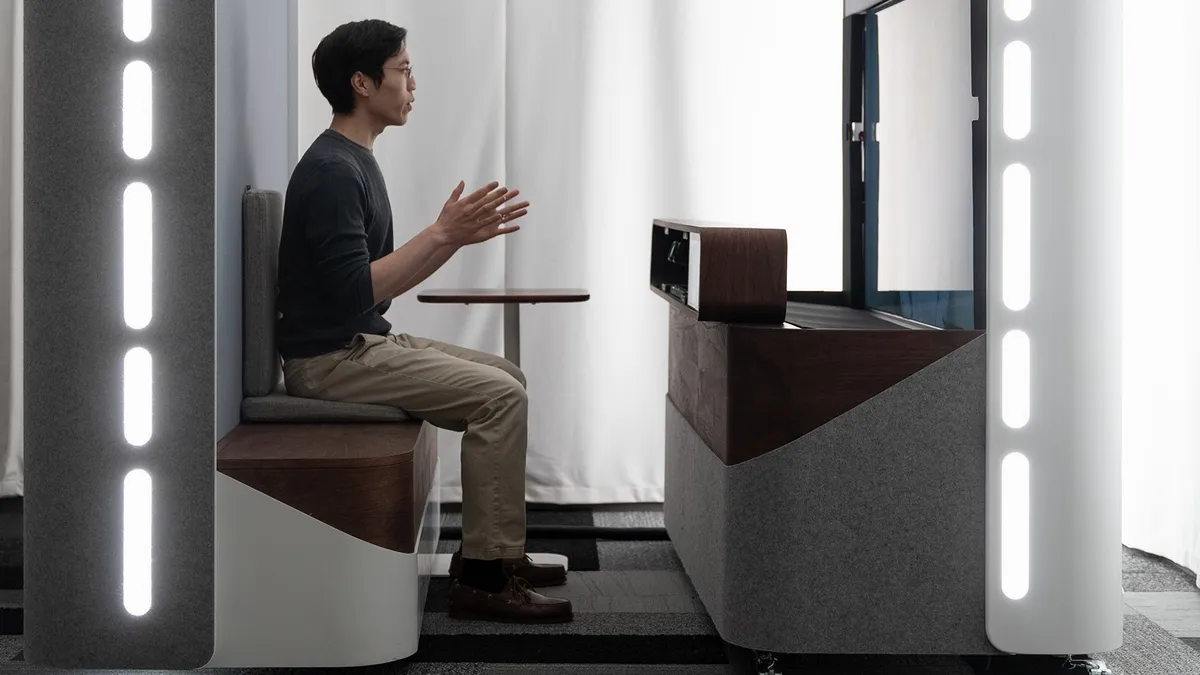
That image is then transmitted to another booth along with your audio, where it's all projected as a real-time 3D model using a 65-inch light field display. Both booths transmit their audio/visual data simultaneously, and when it works, the effect is almost holographic — in the video demonstration Google provided, two speakers using Starline were able to make eye contact and use gestures as though they were sitting together in the same room.

The data is transmitted bidirectionally using custom compression techniques developed by Google, via the open-source WebRTC framework which underlies Google Meet.
Google Starline: Outlook
The Starline technology is still deep in development, so don't expect to see it rolling out to customers anytime soon — if at all. Since Starline relies on a suite of special cameras and depth sensors, not to mention expensive light field displays, any communications product it might lead to would presumably first roll out to corporate and enterprise customers with the means to make use of it.
Still, it's exciting to see Google pushing the limits of how volumetric holograms can be used for live communications. Google AR/VR VP Clay Bavor recently told Wired that the company will be doing trial runs of Starline tech with a few corporate customers later this year, after roughly 14 months of trialing it in-house.

